Khwai Village

Today we move to the Moremi Game Reserve, our last stop. We drive by the location of the wild dogs but they are not visible. It is extremely quiet and we see almost no wild life except impala.

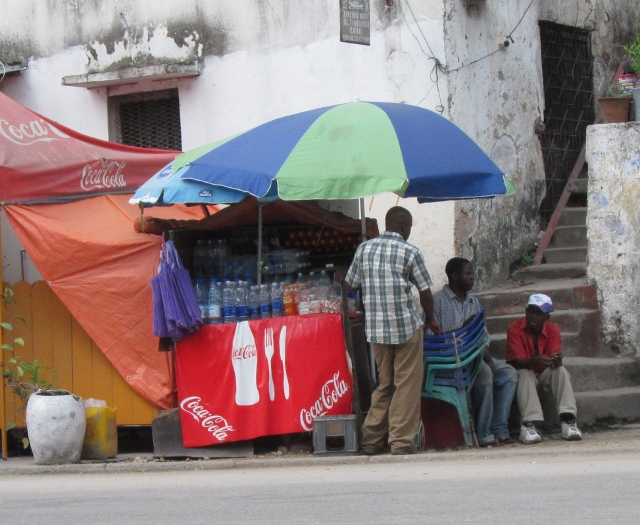
We stop at the Khwai Village where about 300 people reside. We have asked Pat if we could walk through the village, if for nothing else to stretch our legs.

You see, we feel we are held captive while we have been on safari here. Our walking distances are either 20 steps from our tent to the dining tent, or 15 steps from our tent to the vehicle. Once we walked maybe 200 steps to see where an elephant slept. That has been the extent of our exercise for the last week. Those of you who know us well will understand that will be hard to take for Murray and me.

Anyway, we park at one end of the village, chat with some ladies and then walk down the road through it. We meet a fellow who works for the Khwai Village Trust and he is supervising the construction of a house for a poor woman and her children. The Trust has a program that provides employment for people who cannot find work by hiring them to build this house. The workers are fed breakfast and lunch and are paid a small wage. He did say that sometimes the workers are not motivated to work (as witnessed) and he has to keep them progressing on the house.

The houses in the village are mostly block and plaster with thatched roofs. The technique of using termite hill sand for the blocks and plaster is slowly being replaced by cement and cocrete blocks.

After we pass through the gates of Moremi Game Reserve, we see more game in an hour than we have seen in days in Khwai. Hopefully this will continue for our last 2 days in the wilds of Botswana.

Posted in Tanzania and Botswana | Tagged , | Leave a comment

Weather

Temperature

After relatively nice temperatures in Tanzania we arrive to sweltering temperatures in Botswana. Kasane, a small town in the north, our safari starting point is 35C and rising.  There is no breeze and the heat is suffocating. We walk all morning at a slow pace and there is no shade. Back at the hotel it is all we can do to remain upright while we waste away the afternoon in the shade.

We leave early in the morning to avoid the heat of the day. It is maybe only 30C when we start. As we travel on the highway in our no sides, no windows, safari vehicle the temperature rises quickly. The hot air that blows by us only exasperates the problem. We try to drink because it is not only the heat but the wind that sucks us dry.

In the afternoon it rains a bit and the temperature moderates. The next couple of days in Chobe National Park are again hot with small amounts of afternoon rain to keep things livable.

Heading south-west to Khwai Conservation Area and the clouds roll in. It is nice to be protected from the glaring sun and the cover keeps the temperatures nice enough for a t-shirt and we do not sweat too much.  We get to camp around noon and the thunder starts.

By the 4pm game drive it is pouring. Debbie dons an extra layer, I put on my jacket, we both hunker under our rain ponchos and for 3 hours the rain comes down in buckets. The temperature drops to about 20C and with the nature’s wind and the breeze of being in an open moving vehicle is it chilly. We are again officially warm weather wiennies.

Thunder

We run into the first rain that amounts to anything in Botswana. The thunder is a low throated rolling rumble. Unlike the prairies where there is a sudden very loud clap, loud enough to knock you out of your chair. The noise here is more like you hear on the shoreline of an ocean. It’s loud enough but it starts with a low grumbly kind of boom, gets louder and then rolls across the landscape, the sound decaying over quite a long span of time. Thunder is another interesting aspect of the constant audio sound track that is being played out constantly as the safari movie plays on.

Clouds

The clouds here provide another sort of visual drama. For the most part, they are similar to the clouds that form across our prairies, but they provide the backdrop for spectacular sunsets almost every evening, orange, red, yellow, purple, with the sun streaking through like a bible picture. They are of every shape and colour and we wish our photos could capture their drama. The colours are not quite so vivid with the sunrises but the clouds help with the drama there too and they are worth a stop in the routine for a look. We are starting to read the clouds, from which direction they come and which ones bring rain.


Posted in Tanzania and Botswana | Tagged , | Leave a comment

African Wild Dogs

The weather this morn, chilly. I have to wear a jacket to stay warm while we ply the trails looking for whatever the wilderness will cough up. Since there is not the abundance of animals we have been use to, here in Khwai, our guide has resorted to tracking. Debbie sits on the same side of the Toyota as the guide and she has been learning to identify the different tracks and to tell how recently they have been made. She has got quite good at finding hippo tracks and we think maybe she could open her own guide shop specializing in all things hippo. I’m sure there is a market for such just waiting to be tapped.

Today our pray is the African Wild Dog. There is a pack of these creatures that roams these parts and we set out to find them. African Wild Dogs are very rare and to see them is akin to spotting a Yeti, yet Pat thinks we can find them so we try. Luck is with us, there are tracks and they were made last night. We are able to follow them for a ways because often the animals use the car paths to move about and the dogs are no different in that respect. We come upon an area where the dogs have ‘played’ for a while. There are 4 adults and 6 pups in this pack so there is a lot of rough and tumble being acted out. It is hard to find which direction the dogs went from there but Pat feels they would go north, a fisherman’s instinct, so we head north. We drive aimlessly, left on this road and right on that one. A few impala here and there, suddenly, with the words ‘honey badger’ emerging from Pat’s mouth, he again jumps into action, we are chasing alongside a very fast and agile honey badger. The whole time we were in Tanzania with L&R, L wanted to run into a honey badger, but they are for the most part nocturnal and we did not find one. Today we see one during the daylight hours. He is very fast and good at keeping distance and the thickets between us and him. The pictures I tried to take consist mostly of blurred leaves and branches. So L will just have to believe that we saw, however briefly, a honey badger.

Pat is sure the wild dogs are near so via radio he commandeers Pula, our cook, into assisting with the hunt. Pula talks to a self-drive tourist who spotted the dogs a while before but lost the trail. He did provide Pula with the location of where he had seen the dogs.  Pula plies that area, soon we get a call stating he has found a kill and the vultures are having a feast. The dogs had hunted and killed an impala, feasted and left the rest for the scavengers. When we arrived there were a dozen or so vultures squabbling and eating the carrion. These birds have absolutely no table manners. They fight and squawk and push their way to the front of the food line with absolutely no regard for the others.

After watching the birds pick everything but the bones, this took only about 20 mins. emphasizing what pigs they are, we head out to continue our search. Changing our tactic we go west but stay in the north part of the conservation area. As we pause by the river to photo some grazing reed bucks another vehicle passes by and as always the guide stops to exchange the day’s news. One of the vehicles from his company has located the dogs. They are sleeping about 500 meters from where we were searching earlier. Zoom! We are on our way. Spotting the ubiquitous gathering of 4WD’s at any sighting, we knew we had found our morning’s prey. Unlike most of the animal kingdom we were only there to steal images. The dogs, which are usually skittish, are just lying there with full bellies. An animal’s life here can be cruel but most of the time it does not appear to be overly stressful.

Our first stop in the late afternoon was a return visit to the wild dogs. As it has been the case for this part of our journey, we are the only vehicle there. We watch for a short time and the adult dogs appear to be restless. Soon, one by one, in single file they saunter off north towards the river. The pups follow the adults. Pat says let’s follow them, they may be going for a drink of water. We are using the 4WD for what it is meant for – we are off road now. It’s hard to follow the dogs through the thicket, but we manage to track them to the river. On the opposite bank of the river there is a troupe of baboons intently observing the movement of the dogs. On our side of the river, the adult dogs are not fearful, but the puppies keep their distance as baboons can be dangerous to them. The puppies depart on their own, soon followed by the adults, all without taking a drink. We loose track of the dogs in the thicket. The puppies return to the spot where we initially found them.

There is commotion in the trees and the adults are on the hunt. Impala are running and leaping every which way. One of the adults returns to the puppies with a piece of meat which they greedily devour. They understand that they are supposed to follow the adult back to the kill site. We dutifully join the end of the line. As we are watching the puppies eat the remainder of a baby impala, there is another disturbance in the trees. Two impala fly by at top speed with two wild dogs chasing. We are on the move too. In no time, one impala is brought down and the feasting begins anew. These dogs are fast. The adults had eaten most of the first kill, so they leave the second one for the pups. The impala is quickly consumed.

We are on a “night game drive”, so we stay out past sundown. Once it turns dark, Pat uses a flashlight to locate the eyes of the animals. We are looking for red or orange eyes of cats and predators. Blue eyes are impala (day time creatures) and we do not focus on those as we do not want to show the predators where they are.

We see hippos, their great grey bulk shining in the flashlight beam, munching grass close to the water channel. When we are almost back to camp we spot a python gliding over the ground. It doesn’t oscillate as it moves forward but travels in a straight line.

The day, which started off cool, heated up and has cooled off again. We are back in our jackets as we dine in the outdoors.

Posted in Tanzania and Botswana | Tagged , | Leave a comment

Sleeping, Eating and Floating

We are camping, safari camping, not North American mountain camping. We have a tent just large enough to fit two cots and two small tables. Our cots have sheets, pillows and comforters on them. The tables have African motif cloths over them. Out the back door of the tent, is an enclosed space with a pit toilet and a bucket with a shower head, referred to in the literature as an ‘ensuite’ . Sort of indoor outdoor plumbing. Water is heated, poured into the bucket and the shower is ready.  It was raining the other day, and we had warm showers outside in the rain.

We have a tent porch where I am sitting right now typing. Two chairs, wash basins and a gorgeous view.

There is a dining tent where we eat all our meals. The walls of the tent are removable so we may enjoy the view. The tent is large enough for a dining table (foldable) and a serving table and space to move around in.


The kitchen is a similar sized tent with tables, stove and firepit. Pula, the chef, and Dunega, camphand 1, toil away to create different gourmet meals each day. Murray is in heaven each day there is fresh baked bread and if you can imagine there is peanut butter in Africa. Pula’s dome tent is right behind the kitchen. Dunega, and Mosh (the waiter) share a dome tent which is placed a little way beside the kitchen.  Pat’s tent is on the other side of the camp, about 50 paces away. There is an enclosed toilet tucked in behind some trees for the staff to use.

Pula comes to announce supper and always gives us a description of what is being served. He is accommodating my food issues with no problem and serves me tasty inventive dishes. I had potato and sweet potato “lasagna” today. He says he is going to teach me how to bake bread with rice flour and potato flour. It is very hard not to overeat!

Mosh serves us our meals and stands ready to fulfill our wishes. He told Murray that his job is to get us what we want before we even ask for it. He is a friendly fellow and Murray enjoys chatting with him. He plans on going to guide school next year after he has saved enough money.

We don’t see Dunega too much. He is the camp helper and works mostly behind the scenes helping Pula and doing chores. Pat says he is very shy so doesn’t say much.

I imagine that colonial life was much like this. Servants, no cooking, no work. This safari camping is a different life.

Murray’s insert

Today is we have a mokoro ride scheduled. The mokoro is a dugout canoe that has been used as transportation on the delta for eons. The people were using too many trees to build mokoro so a few years ago the government developed a fibreglass version that is used today. We ride in a fibreglass model.  The driver poles the moroko while standing at the stern similar to a Venation gondolier. We sit right in the bottom of the boat like the cargo in a North American Indian canoe.

As we move along the river the silence is deafening. The poler makes no noise when he dips the pole; the slight splash along the side of the boat is hypnotizing.  We pass a herd of elephants along the channel bank and can only hear the slosh of their footsteps as the move from patch of grass to patch of grass. It is midday so even the birds are relatively quiet; we hear only individual calls instead for the regular symphony that plays in the mornings and evenings. The tranquility and serenity is almost enough to lull us to sleep. Two hours later we are back on shore and on the road to find more animals.

Fifty meters off the main road there is a small ‘bachelor’ herd of elephants, four males of varying age and size. One of the almost adults and a full grown adult seem to having some sort of disagreement and are eying each other up. Without much warning they are butting heads and using their tusks to twist each other. It looks like a wrestling match. They break, but only for moment and then butt heads again, this time with much fervor. We hear the ivory of their tusks clack as contact is made. We are all madly snapping pictures. The tussle continues for a minute or two and the combatants part. The oldest male, who until now has been on the sideline munching grass, moves between the other two. He has obviously had words with the fighting two because the three stand head to head and intertwine trunks. I think the wise old elephant sensed when things were about to get out of hand and put a stop to it. It is too bad that the governments of the world cannot learn from the animal kingdom.

Botswana has not provided us with the abundance of animal sightings the Serengeti has, but the things we have seen here are very unusual. Luck follows Debbie and me on most of our adventures and this one seems to be not much different. Most that come here do not see lions kill a baby elephant, they will not witness two elephants tussling, to come upon an impala having trouble with child birth is unusual even to our guide, these things are the ways of the wild and we have happen upon more than our share.

Posted in Tanzania and Botswana | Tagged , | Leave a comment

The Animal Kingdom

Yesterday, out of respect for one of our new found friends, we kept the blog to a few lines, but the events of the day demand we add an addendum to that edition.

The entire day is an eye opening experience. It is the first day where the realities of the animal kingdom show us the not so cutesy aspects. We have an omen of the dead elephant carcasses that litter the landscape here but they are just a taste of what is to come. The dying elephant put our minds and hearts in a sad state, and the morning drive was a little somber. We leave on the afternoon drive and Pat jolts the vehicle to a stop. He spots an impala giving birth. The weird part is she is standing and wandering around, not lying down. As we get a better view we all realize the baby is dead and only half emerged from the mother. She does not seem to be able to disengage herself from her burden and it seems both will die.We watch for quite awhile and little or no change is apparent.

Just before lunch we had watched two male lions not three meters from the Landcruiser, lounging away the day as big cats seem to do. We return on the same road after lunch and after spending some time with the birthing impala we move on to find the lions had relocated themselves about 2 meters from where we had seen them earlier, using up all the energy them seem to have. We watch.  Other vehicles come and leave. We watch more.

One of the brothers rises and puts his nose into the air. He deep breathes four or five times. Down the road we see an elephant and her baby cross. Suddenly, the lion rises and trots off in the direction of the elephant.

Debbie says “Run Elephant Run!” The  brother continues to sleep. The mother elephant bellows to try to scare the approaching lion. Lion 2 jumps to his feet and hurries off in the direction of the ruckus. We move quick to follow. The mother, with a confused child, is no match for two lions.

The elephants exit in an attempt to escape. The lions follow and pounce. The lions have downed the baby. We watch horrified but fascinated as the lions suck the life out of their prey. Our mood and hearts sink a little lower. A sad day turns sadder.

Down the road again, we pause to watch a herd of impala. There are a lot of babies. We all seem to be watching one in particular. It moves and in unison we realize it has a gimp leg. It runs well on three, but after what we saw the lions did to the baby elephant, this baby impala is not long for the world.

So ends a day of mixed emotion and survival in the wild.

Posted in Tanzania and Botswana | Tagged , , | Leave a comment

Cats, an Elephant and Termites!

We have a quick breakfast, break camp and head towards Khwai. Our first sighting is a group of trucks. There is a “kill” up in a tree. That means leopard. We hear from another guide it is the same mother that we saw on day 1 in the Savuti. And she has BOTH her cubs with her. Finally, a happy ending! All of a sudden the male cub starts to climb the tree towards the kill. We watch while he scales the trunk and then jumps from branch to branch towards his meal. We watch him tear at the dead impala, it is hard work.

At the base of the tree, mom sits patiently, stirring occasionally. Sister is in a nearby thicket, most likely sleeping. Eating and sleeping take up a good portion of a cat’s day.

We drive on, the landscape heading south in Chobe National Park looks rather inhospitable. Sandy ground, not much ground cover, low shrubs with not many leaves.

Our second sighting is another mother and children. A lioness and two male cubs. They have come across a recently deceased elephant and decided to partake in a meal. They have finished eating by the time we arrive, and are, of course, lounging. The cubs are new to sighting safari vehicles and are skittish. They are dirty faced from their meal. Restless, they move about pacing in circles while mom keeps a watchful eye on them.

We arrive at our next camp. The diligent camp staff have it mostly set up already and we fall into our lunch as we are very hungry.

We watch an elephant about 50 meters away from us also eating his lunch. He is across the water that borders our campsite. The elephant starts across the water and we watch in awe at his gracefulness and quietness as he pads through the pond. We walks right by the edge of our camp as we hold our breath and stay very still.

As we get ready to go for our afternoon game drive it starts to rain. We all don our rain gear with the attitude that a little rain won’t stop us. It turns into more than a little rain. We learn two useful items about when it rains. One, all the animals hide. Two, the termites fly out of their nests by the billions. After getting one in my mouth, I pull my scarf over my lower face so not to eat too many. We finally give in to the rain and head back to camp early for another delicious supper.

Posted in Tanzania and Botswana | Tagged , , | Leave a comment

November 23

Today we witness a very sad sight. We approach a waterhole to watch a herd of elephants drink. Not more than three meters from where we stop the truck an adult female elephant has collapsed and cannot get up. She is dying.

RIP

Posted in Tanzania and Botswana | Tagged , , | 1 Comment

Cats and Birds and Mongooses!

The morning glow is faint and “Good Morning” originates from just outside our door. New system. Early morning game drives, afternoon siesta in the heat, and evening game drives. Meals before, between and after. Sleep when appropriate.

No animals passed through the camp last night but the morning bird sounds have make a comeback. Loud, many and 360 degrees. At 5 am when Dunega comes to rouse us, I am mostly awake. Shave, teeth, quick breakfast and the camp is behind us by 6 am.

Less than a km down the road we get a lesson on leopard tracks. He(she) followed the road we are on so we keep our eyes open. We pass through an area that looks as though a tornado has demolished the trees. Elephants use their bulk and strength to push over the trees to better access the tasty morsels at the top. This area is obviously populated with trees the elephants like.

The Savuti Marsh is quiet. For the first two hours the only other vehicle we see is a film crew that probably preceded us in the animal search. It rained the last couple of days so the animals have moved to other places where water collects. Don’t know if it is better water or they want a change of scenery.

We are driving slower today. No destination, just game viewing. The flies are of the same variety as the ones in Tanzania, bothersome and pesky. The lady riding shotgun in the filming truck has a head scarf covering all but her eyes, nose and mouth, foiling the bothersome insects’ attempt to buzz her.

Many birds congregate at one of the water pools that intersects our path. Pat gets excited when he sees a small flock of Pied Kingfishers dive bombing. We spend at least a half hour there trying to photograph one of them pulling a fish from the water. These birds hover, similar to hummingbirds, over the water, spy their prey and drop straight into the water, sometimes rising up with a small fish in the mouth.

Pat’s camera battery dies and all he can hope for is that the once in a lifetime photo op is not imminent. And as luck would have it the word reaches us that a mother leopard and her cub are on the march not far from where we are. Pat hears that this mother should have two cubs, a male and female. The male one is either dead, has ran off or is in hiding. When we arrive, mom is resting in the shade; daughter is exploring the wilds nearby. With patience and some coaxing from the kitten, mom is on her feet and moving again. Four vehicles follow along as she moves parallel to the road.

She angles toward us, everyone present seems to understand she is going to cross the road. The path is right between the vehicles. I hear more camera clicks in one minute than I have heard in any one day over the past 2 weeks. The duo crosses over 2 more roads and there are 4 vehicles waiting for her at each crossing. Debbie has been videoing a couple of the animals in Tanzania and gets some footage of this absolutely beautiful animal as she ambles within inches of our truck.

Lunch is being served back at camp so that is our next stop. The tents are set very close to the Savuti Channel which in 2010, after 26 dry years, flooded. It remains with water even in this dry season. Not more than 100M from our tent wallows a hippo. It is bellowing and snorting very loudly explaining to all near that this is my corner of the channel and keep your grubby paws out of my bath water.

The tourist season in Botswana is about to break, ending at the end of November and starting again around the first of February. We are one of maybe 10 tours plying the area at this time. Debbie and I are the only two on our nine person tour. Boy this is uncrowded even after an ‘uncrowded’ Serengeti. The animals are fewer or at least hidden, but we sit and watch the animals we come upon for a long time, and drink it in as they go about their business of survival.

We spend a large amount of time watching the young animals and their parents as the young are taught the lessons of life. This afternoon Pat spots a family of yellow mongoose, whose abode is located within a meter of the side of the road, out of the burrows and romping around in their yard. The young ones are wrestling with each other and messing with their parents. The adults are busy digging in the soil hunting bugs for supper. Every so often the kids stop their fooling around and dig just as their parents are doing. Hopefully they are finding enough bugs to supply them with calories to play.

We move down the road and Pat says “eyes up”; there is an owl on the ground and it looks like it is trying to lift its prey. When we arrive we realize that it is a mother and her owlet. The mom is trying to show said kid how to flap its wings and fly. The kid obviously made it to the ground but the idea of getting back to the nest is a somewhat harder concept to grasp. Mom suddenly flies up to the lowest branch on the big tree. She sits and waits for her offspring to figure out how to fly. Mom makes not a peep, just looking around presumably scouting potential danger, while owlet screeches ‘help’ from the ground. We watch for quite a while and the only movement from the kid is to duck low to the ground whenever another vehicle passes. It’s time to move on and the owlet has not made it to the branch. We wish it good luck and continue down the road.  Our return trip takes us by the tree where this life drama is taking place. The mother is still in the tree waiting and the child is nowhere to be seen. We assume that it has made its way into the adjacent bush for protection from the spirits of the night. (As a post script; we drove by the next morning and the owlet is on the branch where mama was and both the mother and the father have disappeared, presumably to find food after a long night of child rearing.)

(Murray’s take on what Debbie mentioned yesterday with one more days insight on the subject) As we drove up to the campsite yesterday I saw an elephant lying on the ground. Pat says it is not lying down, it is dead. Both Debbie and I gawk at it as we pass. Not more than 50M beyond there is another dead elephant. Pat tells us that both these have just recently died because he was here two day ago and they were not on the ground at that time. He goes on to explain there are many elephants dying in Chobe National Park this year. Chobe is known for the great numbers of elephants that live here. Over the past year several herds have moved to Chobe in search of food and water. That has increased the stress on an already stressed environment. To add insult to injury the rains are late and the food supply is completely exhausted. As a result nature is taking its course and through natural selection the elephant population is being thinned out. Even with this knowledge it does not make it easier to pass the many, many elephant carcases lying motionless on the side of the track. Our hearts sag each time we see one. It is a cruel end for such giant majestic beasts.

Early to rise means early to bed and we hit the sack at about 9pm. What do you mean we are getting old?

Posted in Tanzania and Botswana | Tagged , , | Leave a comment

Kasane to Savuti

We meet Pat at breakfast and we all realize that he has been staying at the Old House, in Kasane, for the last two nights just as we have been. After breakfast and checking out, we all hop in the Landcruise and drive 30M down the road to where we are going on a Chobe River Cruise. Shoulda walked!

The Chobe River is the boundary between Namibia and Botswana. Dan, our river guide, motors us southwest on the river towards a 1.7 square kilometer island in the middle of the river. It is cooler on the river with the breeze created by the moving boat. Many animals brave the river and its crocs to feed on the vegetation on the island as it is very fertile. Buffalo, elephants, red lechwe are munching away. Yes, I did say crocs and we see two males sunning themselves on the sand bank. I take a quick look and look away – I DON’T LIKE THEM! Hippos are sleeping in bunches all through the channel, we keep our distance.

After we dock, Pat, Murray and I travel south towards Savuti and our campsite for the next 3 nights. It is a long drive, hot with a hot wind blowing at us in the open vehicle. In Botswana the safari vehicles are open sided. As long we stay sitting a cat or elephant will see us as one big object. Pat says if we stand up, they will notice us. We see the occasional elephant, giraffe, kudu. We notice that the creatures are not like Tanzanian ones here – the zebras’ stripes are oriented differently, the elephants seem to have longer legs.

We enter Chobe National Park after driving for about three hours on asphalt and the next 70km is dirt “forestry” road.  After a short distance we come across the first dead elephant. Pat says that too many elephants have come into Chobe and with the very dry season and no rain, there is not enough vegetation to sustain their numbers.  Each day elephants are dying. We come across another soon after. It makes us sad.

All of a sudden it starts to rain. We have held off the rain so far on our trip. Murray, dubbed the Witch Doctor by L, is feeling bad for the elephants, and so he caused the rain. We quickly don our rain ponchos and sit it out watching a lone elephant walk towards us. He gets very close to us before turning down a side track.

We arrive at our camp and it is a tad more rustic than we thought it would be, but we camp in the Rocky Mountains with fewer accoutrements, so we adapt. The trick is figuring out how to live and move around in our little tent with two cots taking up most of the space leaving little space for our two bags. The sunset is incredible with fuscias, purples and dramatic clouds and I manage to capture a lone elephant in the shot. A good end to the day that started in Kasane.

Posted in Tanzania and Botswana | Tagged , | Leave a comment

Kasane, Botswana or Close Encounters of the Warthog Kind

We have a day in Kasane so we head out for a walk to see the town. The first thing we notice is how HOT it is. It is only about 8:30 and it is already searing.

We wander the streets and the children wave and call “o-aa” to us. We think it means Hi or Hello or Goodmorning, but it actually means “white person”! It is not meant to be derogatory, just a saying.

Urban Warthog

Urban Warthog

Down a lane we come across a warthog also out for a stroll. Two dogs spy him and come to investigate. The warthog doesn’t need investigating so he chases them away, all the while Murray and I are trying to get around the trio without become casualties. We are disappointed we didn’t get to see him run away with his tail straight up in the air, Pumba style.

The wild animals, mostly warthogs and sometimes elephants, wander through the village here, from what we can understand, on a regular basis. Much like they do in our Banff or Jasper. No one seems too concerned and as long as we keep a reasonable distance the animals seem OK with it too. Much different from the motherly approach to taking care of tourists in Arusha.

We stop by the Police Station to look at a couple of enormous Baobab trees.

As the tree gets very old, it hollows out in the center, like most trees. These hollows were used as poachers hideouts, prisons, mail drops – all sorts of uses!

The flowers on the tree are large and look like something we should find underwater.

As we walk we notice that there seems to be a middle class in Kasane. There are the small wooden houses with no windows (poorer) and then there are concrete block houses with windows and A/C and TV satellite dishes. We didn’t notice a middle class in Arusha, but most of the houses were behind high security walls, so there could have been. Botswana is a well off country due to its diamond mines. Kasane has a prosperous feel to it, even walking the back streets. Clean, organized, well constructed houses.

Kasane lies beside the Chobe River. On the other side of the river is Namibia. Hippos and Crocodiles live in the river, but we haven’t spotted any yet.

Chobe River

Chobe River

We are starting our 10 day safari to Chobe National Park and the Okavango Delta tomorrow. It is a moving tented camp, so we do not think there will be WIFI. We will post as soon as we are back in WIFI territory. Cheers until then!

Posted in Tanzania and Botswana | Tagged , | 1 Comment