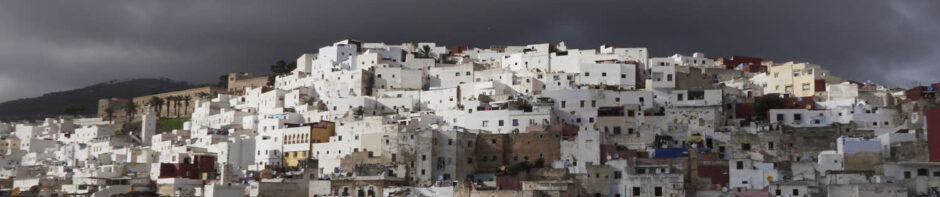
It’s Saturday morning and there isn’t much traffic so we get out of Tirana easily. Soon we are on a 110kph highway travelling south east towards Elbasan. The highway ends abruptly and we wind our way through the town. Everyone is out doing their Saturday shopping.
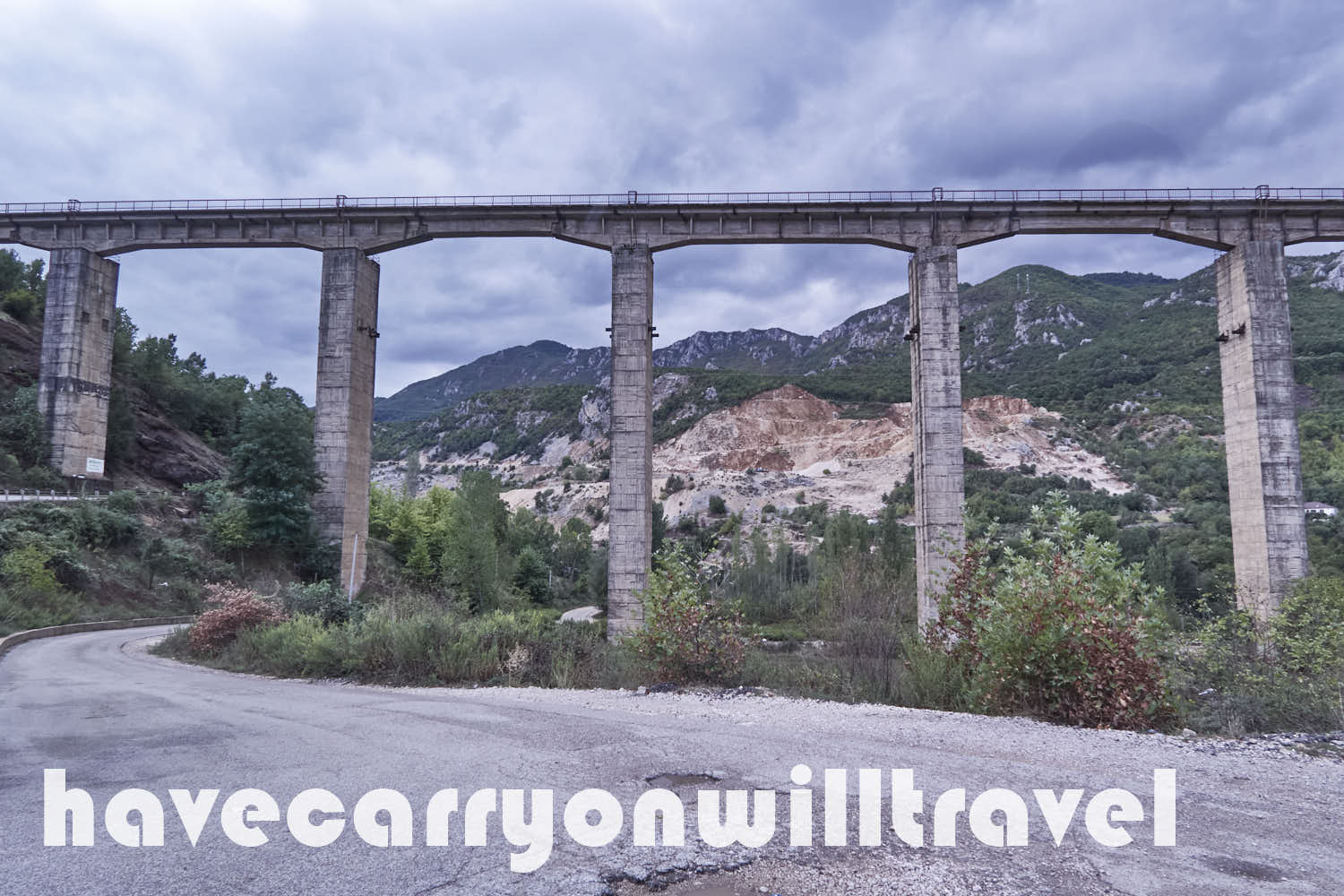
We stop at a fruit stand and I buy four purple figs for 70 Lek, just over a Cdn dollar. The stand also has persimmons, plums, tomatoes, nectarines, peppers and lots more.
The Via Egnatia was the Roman road that ran through the Balkans, connecting the Adriatic to Byzantium. It ran through Durres, Elbasan, Ohrid, through Greece through Thessaloniki towards Byzantium (Constaninople). The road was used for the military and to connect Roman colonies. We are roughly following the same route.
The border crossing into North Macedonia has two extremely long car line ups. Fortunately, we got to use the bus line. It still takes time, an inspection of the van and a description of what we are doing in the country, and then we are off once again.
Yugoslavia had six states and around 1992, it was divided into seven countries – Kosovo, Serbia, Montenegro, North Macedonia, Bosnia-Herzagovina, Croatia and Slovenia. At the time there was war in some of these countries but it did not touch North Macedonia.
Interesting fact. Tito, who ruled Yugoslavia, allowed the country to be half capitalistic and half communist. The people were allowed to travel, have a house, own a car, unlike Albania where the people were lucky to be allowed 2 or 3 rooms in an apartment block and were not allowed out of the country. We noticed that there are more single family houses as we approach Lake Ohrid. North Macedonia has about 2 million people consisting of about 1.3 million North Macedonians and 700,000 Albanians.
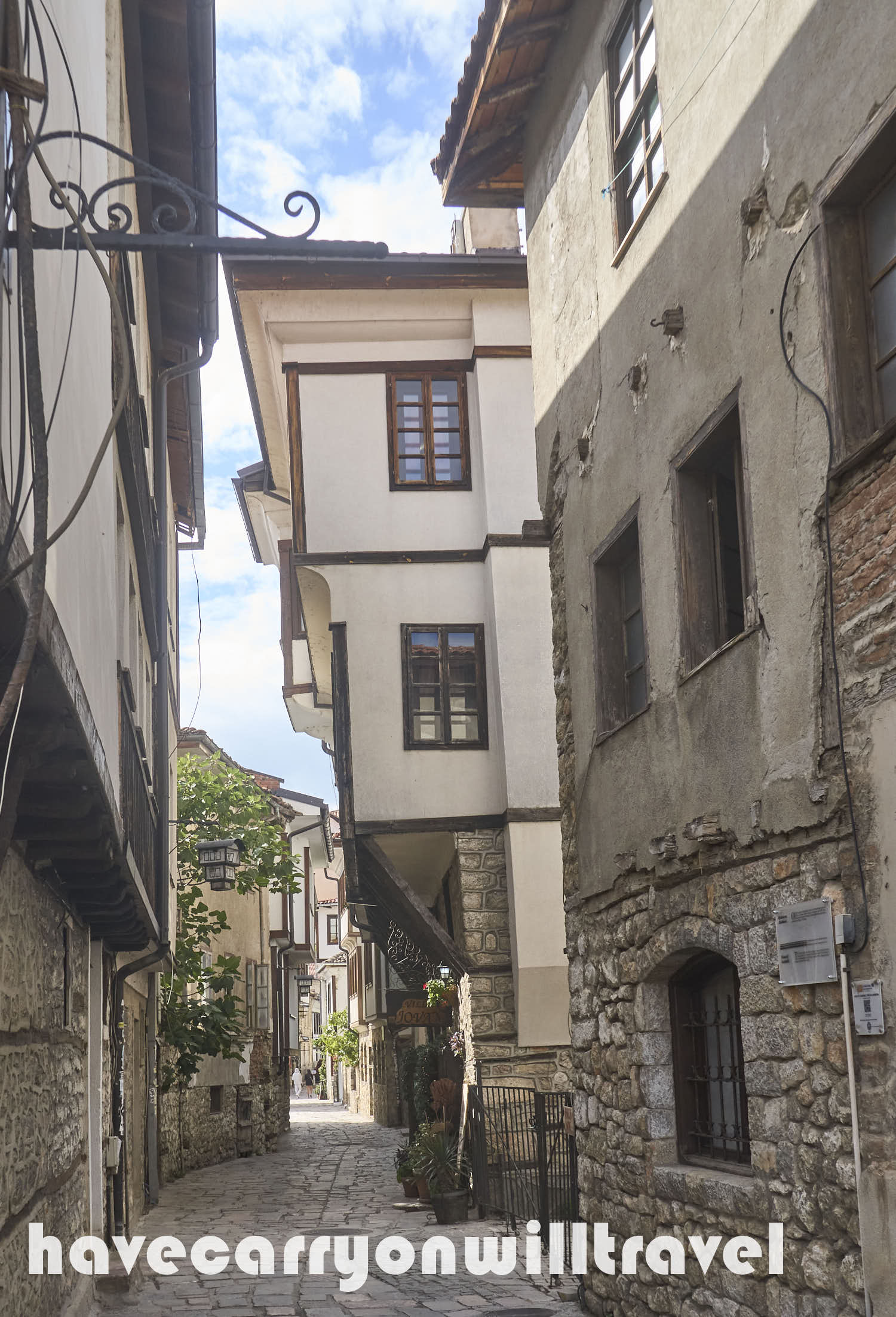
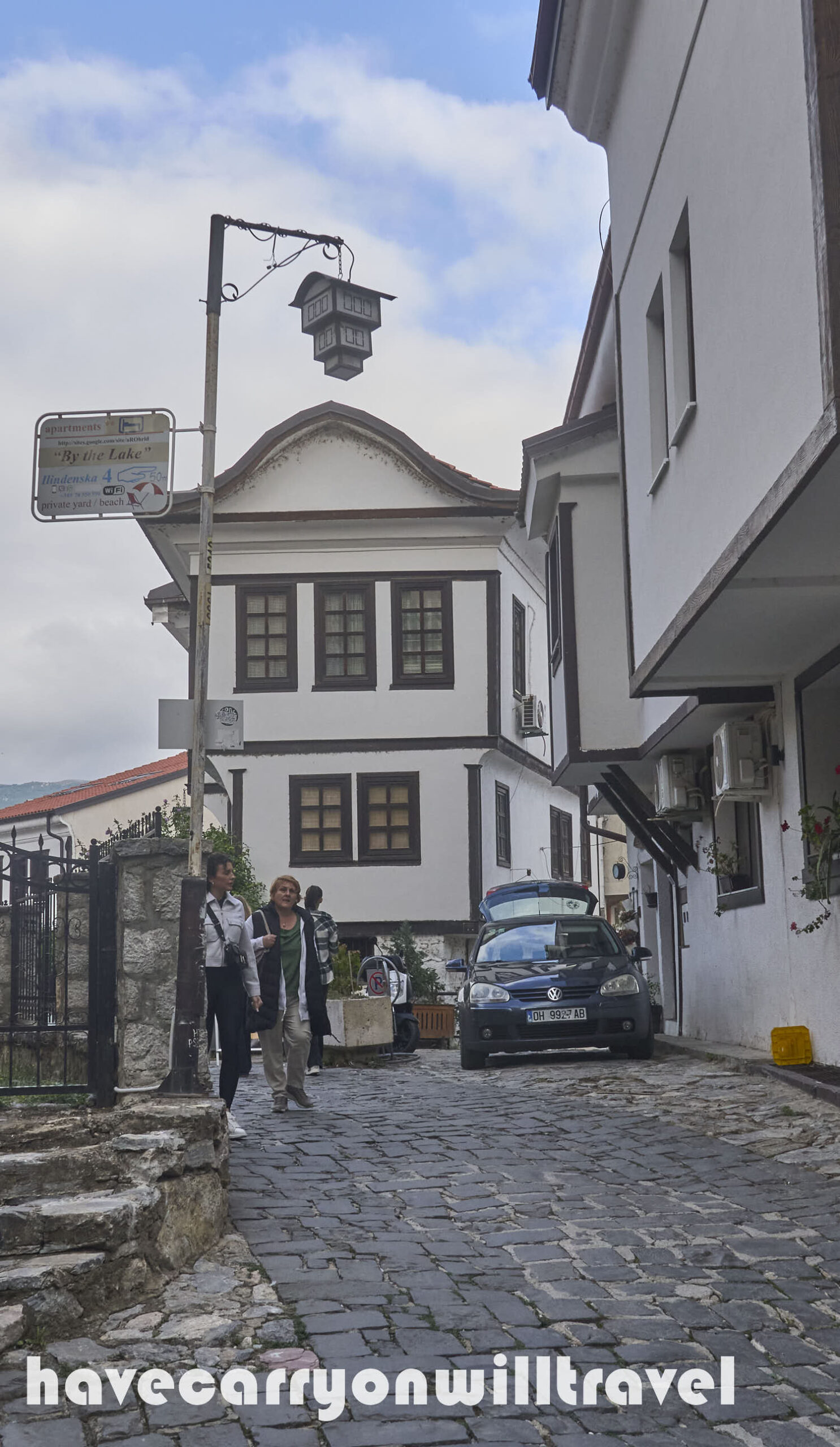
In Ohrid, we take a walking tour of the old part of the town that sits on the hillside. Ivana, a local guide required by law, takes us up the roads, stopping to look at houses and churches. The houses all have a small footprint on the ground level, then expand outward on the first and second levels. It was done this way due to a lack of land on the hillside and to increase the living area inside the house. The area is now a UNESCO World Heritage Site, so the buildings must maintain the old architectural look.
There are two families, Talevi and Filevi, who make pearls. Mother of Pearl is used to make the bead and then numerous coats of an emulsion of fish scales, from fish in Lake Ohrid, are applied. The recipe is a closely guarded secret of the two families.
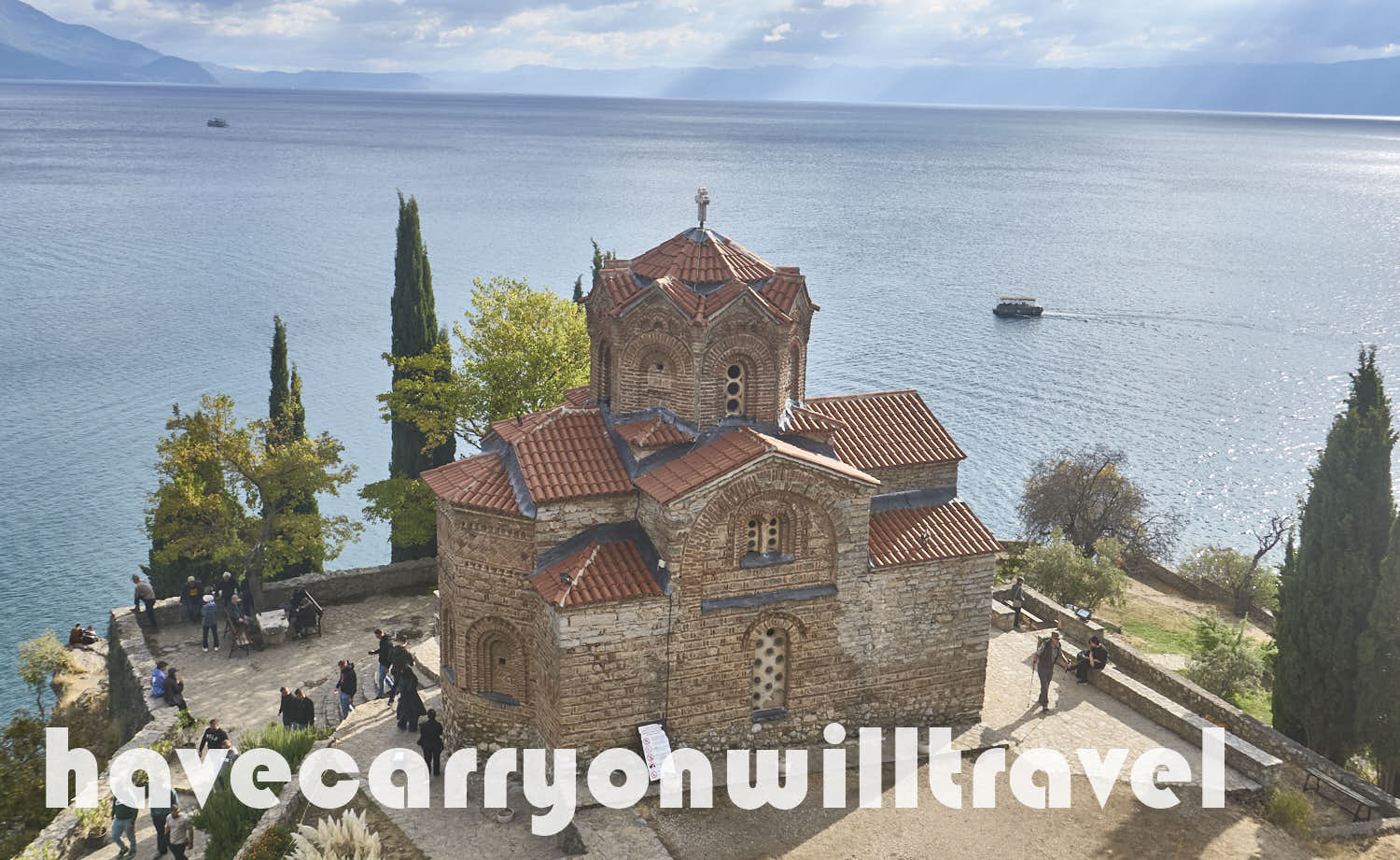
There are numerous Byzantine era churches on the hillside, each with their own story, which I have forgotten already. The buildings are cool though!
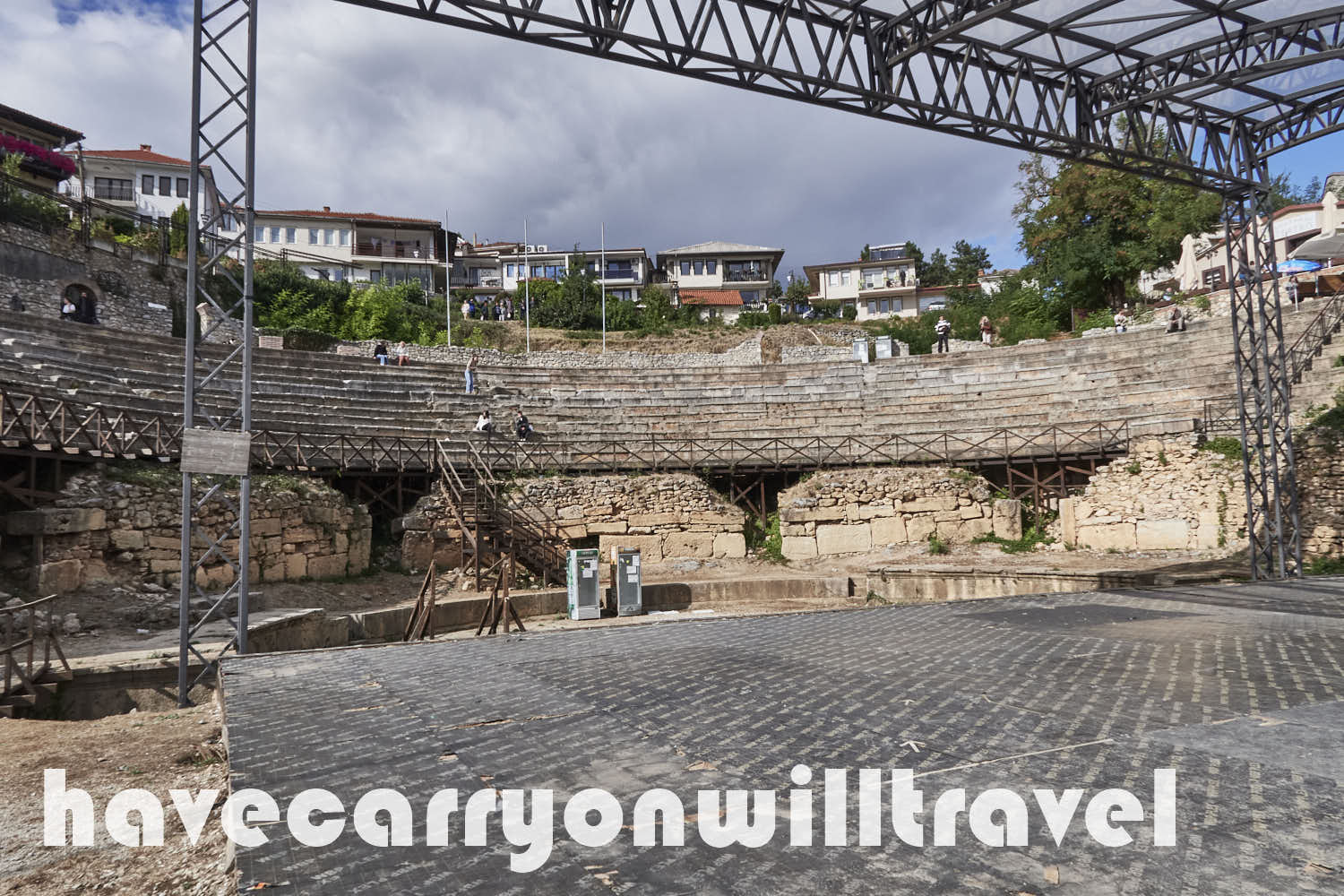
The Greeks built an amphitheater in Ohrid, that was used for music and theatre, around the 3rd century BC. When the Romans took over the area, they converted the theatre for gladiatorial contests and executions. Then, around the 4th century AD the Christians buried it as they didn’t want it associated with the executions. In 1980, when construction was being done, it was discovered, excavated and labeled an historic site.
Tomorrow we are taking a boat across Lake Ohrid to a monastery. The lake is a tectonic lake, one of only three in the world. It was not created by glaciers etc. but by movement of the earth’s crust forming a depression. The lake is 288 meters deep and about 350 sq km. (about the size of Cold Lake, Alberta).