Peace

We left Kolkata in relative calm. It was 6:30 when we left in our 6:45 cab. That shouldn’t have been a surprise as we received our 6:oo breakfast at 4:15. The young fellow didn’t speak English too well so details we discussed were slightly misinterpreted. I’m glad everything was early and we did not have to scramble for a cab at 7 o’clock.

At that time of the morning Kolkata is just getting going and we only had to maneuver through the beginnings of rush hour. I was a good way to leave the city.

The airport was a breeze. We had walked by the Jet Lite Airlines office yesterday. Stopped in on a whim to see if we could get our boarding passes and lo and behold they had a “city check in” counter. We got our boarding pass in about one minute, No ID or anything. That made the airport super-fast. There was no crowd yet, and security was clear. We were just 2 ½ hours early for a domestic flight.

Soon the islands appeared and we were in a tropical land. After a short very efficient effort we had our RAP (Restricted Area Permit). At the arrivals gate there was a fellow, Johnson, with our name on a sheet of paper. We had a ride. Man, that guy was slow. I could hardly walk as slow as he did and when he drove I almost dosed off. This is India? We had arranged with the hotel to have our ferry tickets bought in advance and the driver and car from the airport to the ferry came with the deal.

The reason for getting the advance ticket was the horror stories that are on the web about how hard it can be to get tickets, and what a scene it is at the ticket wicket when the tickets go on sale and that sometimes the ferry is sold out. We had made hotel reservations for the same day we arrived by plane. So, if the plane was on time we had a 50/50 chance of making to our hotel that night. Anyway, I do not think it was necessary to have the advance arrangements. I cost us 1200Rs for the ride, the driver and the tickets. We probably could have done it for 600Rs or less. The port authority now sells ferry tickets up to 3 days in advance. The advance ticket sale wicket is open 9am to 4pm (lunch 1pm to 2pm) weekdays and 9am to noon on Saturdays. (Don’t know what you do on Sundays) There is no scrum; in fact I did not even see a line up. You just walked up to an available wicket and bought the ticket you need. There are 3 sailings from Port Blair to Havelock, they are at 6:30am, 11:20am, and 2pm. There are 3 classes of tickets,seat (195Rs), chair (260Rs), and bunk (260Rs). I do not know what the difference in accommodation is but we had a ‘seat’, it was downstairs in a rickety old boat with only one small escape stair. Not the best as far as safety is concerned but anyone could access the top deck and if you could find shade you were much more accessible to jumping overboard should the need arise. The price on the ticket was 250Rs, I’m also a little confused about that but,c,est la vie.

We arrived at Havelock, there was calm in the world,and much to our delight there was another driver waiting to shuttle us to the Emerald Gecko. The Gecko is one of the more popular budget hotels on Havelock Island. It is very basic but nice enough. The big reason for choosing it wasduring our email correspondence with Nikhil every question we asked was answered and in a very polite and prompt manner. Anyway, even though our lodge has no creature comforts we are living in a bamboo shack on one of the nicest beaches in India. How bad can it be?

We visited the dive shop that is hooked up with the Gecko, Andaman Bubbles, and the guys are super. We are going to dive 5 of the next 6 days and it looks like it will be fun.

This morning we had basically missed breakfast, and for sure we missed lunch, so we desperately needed supper. Neither of us does well with no fuel. The Clown Fish restaurant is attached to the dive shop and it opened for the evening just as we had ended our dive reservation. We sat and ate. Indian food is not on the menu so; it was chicken and chips for Debbie and mushroom pizza for Mur.

The peace and quiet of the island is taking us over and the bed was calling.

Posted in Bhutan and India | Tagged , , , , , , , | Leave a comment

Kolkata Fini

Today is the last day in the big city. I think we have had enough. We have gotten a pretty good overview and the next layer is too big to master in a day or two. There are a few loose ends that need to be tied up.

First the heat. We know tropical heat. We have been to places that are hot. Here the sun is overhead and strong and the air is quite still and man it is hot. Debbie and I spent the entire day wet in sweat. We drank copious amounts and still didn’t pee all day. We both come back to hotel each night absolutely bagged. I think the daily temp is cool for the locals and no one seems to be complaining, but for us it is wearing.

Beggars. I can’t quite grasp the concept. If you actually gave money to each and everyone one who asked, either directly or implied, you would spend more than what you spend on food and lodging for the day. After reading the book ‘A Fine Balance’, and understanding that most of the disfigured people that are on the street begging were purposefully disfigured at a young age and work the street for a beggar ‘pimp’ I’m not sure if one should help out or not. Then there are the young women with a child in their arms or the lone kid asking for money indicating that they need something to eat. I do not know if it is true but understand that there is a living to be made by doing this. Frankly, I found both the women and the kids annoying and would not give them money just because of that. Last, I did not see anyone give any beggar money. We passed maybe 100 of them in the last 4 days and not one person, tourist or Indian, handed out a single rupee. For the truly destitute I do feel sorry, this would be a hard country to make a go of it, but it is impossible to tell the ones truly in need. In situations like this I admit I do lack compassion but after all the Buddhist training the past week you would think I should be somewhat more generous.

I have mentioned the ballet like flow of traffic on the streets of Kolkata, but a similar thing takes place on the sidewalk and with the pedestrians along the edge of the driving lanes. In Europe when walking along the streets the people have blank stares and walk undeviating along their line of travel. This is quite intimidating for North Americans and it takes a bit of time before we too can walk holding our line and not giving way to someone every 2 ft. In India the whole system flows. It is just like the traffic. When a hole opens up, a person is there to fill it. There is no intimidation, everybody shares the space. Every once in a while you might brush shoulders with someone but no offense is taken.  It is very comfortable walking here and I think it comes from a understanding that by the mere use of the space you accept the fact that you are part of a social network and you must share the space.

If you are Coca Cola and you don’t want to devalue your product but you still want to gain market share in a country where the people cannot afford to pay top dollar for a pop, what do you do? The answer, put Coke in a bottle labeled ‘Thumbs Up’ and sell your product at a discounted price. I am leery of  generic brands of cola because at home they are generally of inferior quality. I was at a restaurant here in India, and they did not have any Coke. The waiter said they did have Thumbs Up and assured me that it was very good. I was dying for caffeine so I gambled. It was amazingly good. I did not have my glasses on so I could not read the bottle’s label, but said to Debbie that I bet that this was just Coke with a different label. She picked up the bottle and read ‘bottled by the Coca Cola Company.’  Best generic cola I’ve ever had.

Last but not least, our hotel. What a great place. The Bodhi Tree, Boutique Guesthouse. It is in south Kolkata in Swiss Park. It is also an art gallery. The rooms are well appointed, clean and have loads of personality. It is really small, so you get to know the staff and other guests almost immediately. Off on a side street, it is quiet in a city of constant noise. The young man that is the manager, Santu Dutta, has been nothing but polite and helpful every time we have talked. The two fellows that seem to be in attendance 24/7 and do the breakfast have been most accommodating while trying to help out finding food that is within Debbie’s  dietary repertoire. We have been lucky the last few trips we have made and found a couple of ‘funky’ places to stay. The Bondi Tree definitely qualifies as one of the ‘funky’ places. I don’t imagine that it is a place for everyone, and for those that utilize 5 star accommodation I would think they would be disappointed but I would not hesitate to recommend this place to stay.

Good bye Kolkata, on the whole I like you as a city. Your people have been most accommodating. Debbie and I spend most of our time off the beaten tourist trail and we got some very surprised ‘what are these white folks doing here’ looks, but every time one of those people stopped to talk, and it was often, we had a good jaw and learned a lot. The people were, to a person, polite and I think very happy that we would take the time to visit their city and talk to them about our country. We had fun.

Posted in Bhutan and India | Tagged , , | Leave a comment

Sights of Kolkata

Ranji Stadium is where cricket is played.  Cricket is big here and the stadium is a monument to it.  Seats 70,000.  It is more circular than a football stadium. Workers were preparing the field.  Cricket season is nearing, perhaps.

Indians bathing in the Hooghly River near the ferry terminal.

Bathing in the Hooghly

2 of 2 million people crossing the Howrah Bridge.  Porters carrying goods.  Men on the way to work. Women are almost non existent most of the places we walked.

Walking across the Howrah Bridge

The Mullikghat Flower Market is where yellow and orange marigolds are sold in chains. There are red hibiscus flowers too. It is so crowded that we can hardly get through the aisle. The colours are bright against the squalor.

Mullikghat Flower Market

Two bodies, the first one in a glass carriage on its way to be buried. The second one, wrapped and being carried by relatives, on a rough open wooden stretcher, draped with flowers. The body flopped around as they progressed down the street.

A man ran past us and jumped onto a moving bus.  He grabbed the handrail inside the open side door and swung his legs in.  It was quite James Bondish!

Commuters on packed on a bus

There are people napping on the side walk curb or where ever they can get prone. Don’t know if they live there but they are there and no one steps on them.

The ladies in their bright colored, wonderfully designed saris. Immaculately clean in a generally dusty, dirty, polluted environment.

Beautiful 19th and 20th century buildings built along grand avenues that haven’t been tended to since the British left, slowly, or maybe quickly, being reduced to a pile of rubbish.

People, people everywhere, for the most part going about their daily routine of making a living. There doesn’t seem to be any really poor people, everyone is eking out a few bucks from the system, but maybe we haven’t found the slums. The mass of humanity is probably the most striking vision to a westerner.

Posted in Bhutan and India | Tagged , , , , | Leave a comment

Human Traffic Jam

Imagine, if you will, an average city street off downtown.  Add store fronts, up and down both sides of the road, that extend beyond the curb and that have goods on display right down on the road. Plastics, metals, wood, cloth, everything possible. Add about 6 large dump truck sized trucks carrying various goods. Now add 8 to 10 cars and as many motorbikes. Your imagined picture should be getting crowded by now.  Next add 10 bicycle rickshaws with trailer beds also carrying small and over sized goods.  Finally add as many people as can possibly be crammed into every spare square foot of space and then add some more.  Some of the people are carrying goods on there heads. Now cause all this to move in both directions with as much noise and commotion as possible.  Add Debbie and Murray into the middle of this human traffic jam. We were stopped, nothing was moving, not even the pedestrians. When we started to move we, the peds, all moved in behind a big truck like the infantry behind a tank. After 20 steps things froze again, and so it went for 20 mins or more.

If I do not experience anything else while in Kolkata, I will be satisfied.  This morning, we saw the city at its finest.

Motorized traffic on the Howrah Bridge

The Howrah Bridge extends over the Hooghly River.  We had read that about 2 million people cross the bridge every day.  We had to go have a look.  As we walked towards the bridge, we felt like we were swimming upstream during the salmon spawning run. We pulled over to the side once we got level with the road to watch the traffic.  There are four lanes filled with mostly taxis and buses flowing continuously. The volume of traffic and people was just astounding.

We spent the rest of the afternoon trying to cash our Canadian Travelers Cheques.  I will let Murray tell that tale.

We have never had any trouble cashing traveler’s cheques. Even though almost every website I have ever read has dissed them. I even carry them in Canadian funds and for some reason people think that is ludicrous, as they believe that you should only carry US funds. I refuse to pay a fee to convert money to US dollars and then pay another fee to convert to the local currency.

This trip has been a pain to cash our cheques. It started in Bhutan. We were with a guide in that country and we were on a schedule so we didn’t have much time to mooch around and check out all the possible locations to cash cheques. We tried one bank and they would not cash T cheques at all. The next bank would not cash Canadian currency cheques. I happened to open a US bank account when our dollar was exceptionally high so I had purchased some US cheques on a whim. The whim proved to be astute because we did not feel good about taking up too much tour time to check all the other banks so I gave in and cashed a couple of hundred in US funds.

Then we got to India, a member of the Commonwealth, so you would think that they might accept Canadian money. Which they will. It is just that the banks will not cash traveler’s cheques unless you have an account at the bank. We tried 5 or 6 banks and all had the same story. I was getting frustrated and asked the young man at the last bank we entered how in the hell a tourist is suppose to get money. It was not reasonable to expect us to open up an account but I could not cash cheques without one and I was running out of money. He said the equivalent of  ‘hang on’ and he made a phone call. He called a money changer, more specifically an international currency dealer and arranged that he be at his office so we could change our cheques.

We walked about 20 mins further down Shakespeare Sarani and after asking several people, found the location of Pheroze Framroze. It is not exactly a household name nor is it easy to find but I would recommend this establishment to anyone wanting to change some money. Mr. Bappaditya Roy, known to English speakers as Roy, was a great help and we cashed our cheques for a good rate with no commission. There was a small charge for taxes and holding fees but it was minor. After spending the entire afternoon being turned away at banks our steps were much lighter from the office of Mr. Roy to the metro.

  • Pheroze Framroze and Company Private Limited
  • International Currency Dealers
  • 212, Chandan Niketan, 2nd Floor, 52-A Shakespeare Sarani, Kolkata

The route home entailed another human traffic jam. We were on the metro at rush hour. Again we experienced how a North American’s idea of personal space differs from other parts of the world. There was nobody pushing from the outside to get more people on the cars as I have heard they do in Japan, but I am not sure you could get 10 more people on our car. As the train passed the south edge of the city center there were more people getting off then there was getting on a we could once again take a full breath.

Posted in Bhutan and India | Tagged , , , , , , , , | Comments Off on Human Traffic Jam

To Hell in a Turbo Prop

As we left Bhutan on the airplane this morning we popped through the clouds and Kanchenjunga was sunlit and majestic to the north of our flight pattern.

Landed at the dreary Dum Dum airport. First thing I notice is that the Kolkata folk do not speak English as good as the people in the hills. Our taxi driver had only a general idea of the area that we wanted to end up in. We made it. Right to the front door??????

We had got up at 4:30, missed breakfast, Kolkata was 30+C and so when we got here we were tired, hungry and way hotter than we have been in 2 weeks. We are in a new place without any knowledge of where to go or how to get around. We set out on foot and walk the 5km downtown. Quite an interesting tour. We crossed streets, a big accomplishment here. Debbie used the old trick of latching on to a local that was crossing the same street and following their path and cadence. Works like a hot damn. We walked by butchers and fishmongers whose stalls are a small tarp on the sidewalk. At least they had a tarp. And we passed several families living on the sidewalk with a tarp as a lean-to against a stone fence as their shelter.

Victoria Monument, Kolkata

We did end up going to the Victoria Museum and walking across the Maiden, a huge park and I mean huge. It took Debbie and me about 30 mins just to cross a corner of the park, which was maybe about 25% of the total area. No matter how daunting the first day has been I think we will soon get into what Kolkata has to offer and will begin to enjoy the city for what it is.

Noise, crowds, odor, heat, garbage and exhaust were the things that caused a major assault on the senses after leaving the quiet, sparsely populated, odorless, cool, and relatively clean mountain air environment of Bhutan. What a wake up call.

Posted in Bhutan and India | Tagged , | Leave a comment

Taps

Farewell Bhutan.

Karma, Debbie, Tashi, Murray, L and R

After saying goodbye to L&R, we headed up towards the Chelela Pass and onto the Haa Valley. As we approached the pass, we realized we were above the tree line.  This was the first time we were above the tree line during our tour of Bhutan.  The elevation of the Chelela Pass is 3,988 m, so we walked up the hill 12 m so we could say we were at 4,000 m. It was extremely windy at the pass and Karma (our driver) says it is always windy up there and in the Haa Valley.

Prayer Flags at Chelela Pass

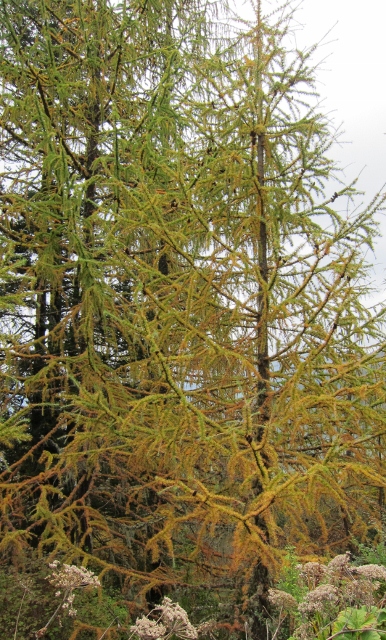
Up at elevation, the trees are changing colours and it is looking alot like fall in Alberta. As we go up in elevation, we pass through a pine forest and then a larch forest. The larch trees were turning a wonderful shade of golden yellow.

The Haa Valley is one valley over from the one in which Paro is situated. Even though it is close to the airport it is rarely visited by tourists. It was nice to go there because the visitor infrastructure is not prevalent and the area has not been swept up with tourist mania. What we saw, I believe, is more what the average Bhutanese person lives like.

We are off to Kolkata tomorrow and will be sadly saying goodbye to Bhutan.  We have enjoyed our time with Tashi and Karma and our traveling companions, L&R.  We do recommend coming to Bhutan to meet the friendly people, watch the colourful festivals and take in the majestic scenery.

As we sit here doing the blog, the sun is setting over Bhutan and so the sun is setting over our visit. R and L have left, jetted out on Druk Air at 4pm, we watched the plane take off. It is sad to see our mates depart. Across the valley the monks are blowing their horns and I swear they are playing Taps.

Posted in Bhutan and India | Tagged , , | Leave a comment

The Icon of Bhutan……Tiger’s Nest

Our first glimpse of the Tiger's Nest

We start our hike

View from the observation point

Taking a break

View from the opposite side of the gorge

Getting closer

Crossing a bridge over a waterfall. One last climb to the Tiger's Nest.

Murray is just behind Debbie!

Our cameras had to be handed in at the top, so there are no pictures from the Tiger’s Nest.

Heading back down

Getting farther and farther away

Trail sure was dusty!

Done!


Posted in Bhutan and India | Tagged , , , | Leave a comment

Stories and Other Thoughts

Debbie writes:

The Goddess of Compassion would reach down into hell and lift people up to heaven. She did this continuously.  Each time she lifted people up and then turned around, there were more people in hell to lift up.  She lifted and lifted and lifted and suddenly became so despaired about not being able to keep up that she collapsed.  She shed 1,000 tears. The God of Infinite Wisdom saw her pain and gave her an eye for each tear that she shed and 1,000 arms to aid in her quest.  He also gave her 10 more heads. With 1,000 arms and 11 heads The Goddess of Compassion was able to lift people continuously from hell to heaven and not despair.

Murray writes:

I’ve read about butter tea. What I have read has not been all that complimentary. Basically the accounts have said don’t bother trying it, you won’t like it. Yesterday, I had the chance to try it. Tashi was talking to the monks, again, and getting us into places we should not be. We were standing in the monastery kitchen staring at 21st century cooking equipment in a 15th century building and all of a sudden Tashi asks us if we want to try butter tea. One of the monks had some tea brewing and was perfectly willing to share. Debbie could not imbibe as butter is not on her list of acceptable foodstuffs, but L, R and I said OK. The monk washed 3 mugs in steaming hot water and poured 3 completely full cups of tea. I was hesitant and only took small sips. Which was a good thing as it was the hottest tea I have been served in Bhutan. The taste was unusual. Not terrible, but unusual. It was kind of like a cup of melted butter. I could not taste the tea at all. It was very rich. I could appreciate how such a hot, rich, and fatty drink would be of substantial benefit on a cold winter night. It would go a long way to keeping you warm in a house with no insulation and only a wood stove for heat. Butter tea is definitely an acquired taste and I don’t think that I personally will take it up as one of my staples, but it is definitely not as bad as the written word would have one believe.

Debbie writes:

The forests in Bhutan are old. The trees look like they are first growth trees, ancient, primal, primitive, Ent like. There are trees that are gnarled and reach for the sky.  Whole forests without any human habitation in them – trees so thick there is no undergrowth. Forests that reach to the mountain tops and run along the ridges casting eerie silhouettes on the skyline.

Murray writes:

I cannot believe how quiet Bhutan is. There is sound, people, cars, animals, rushing water, wind, but it is minimal. We have spent nights in remote valleys, and in the capital city of Thimpu and the quiet is eerie. When we hike in the mountains at home we can park our car on the highway and hike up the mountain.  We can be several kms away and several hundred meters above the road and you can still hear the cars swish by. You have to be over the range and into the next valley before you get anything close to silence. Here the vehicles do not travel fast and there are not very many of them, so the distance required to find quiet is quite small.

We have been staying in remote places and very small cities or towns and the noise at night has been non existent. Occasionally, the feral dogs will bark but unlike in India the Bhutan dogs seem to have a sense of decorum and do not bark endlessly into the night.

We arrived for a two day stay in Thimpu and our hotel was in the center of town. I expected that, with windows that do not seal very well, we would not get a peaceful sleep. We stayed two nights. Both nights the noise in the alley outside our window, including the barking dogs, shut down at 10 pm. The first morning the city began to awake around 6 am and on the second morning, a holiday because of the royal wedding, we had checked out of the hotel at 8:30 and the city noise was non existent.

Debbie writes:

A cow, a dog and a deer all took at shared taxi.  When the taxi got to the cow’s destination, the cow paid his fare of 50 rupees and got out of the taxi. The taxi then drove further and stopped at the dog’s destination.  The dog got out, gave the taxi driver 100 rupees and before he could get his change, the taxi driver sped away. When the taxi driver got to the deer’s destination, the deer jumped out of the taxi and leaped away before he paid for his fare.  And that is the story of why cows stand in the middle of the road blocking the passage of vehicles, they think they own it; why dogs chase vehicles on the road, as they feel they are owed change; and why you never see any deer near the road, they don’t want to get caught for skipping out on their payment.

Murray writes:

We were leaving Thimpu this morning and I expressed my gratitude to the head waiter at the restaurant at the Phuntsho Pelri Hotel for all the help he was to Debbie (food issues) and R (upset stomach). The fellow then offered a bit of a philosophical analogy for our departure. He likened our meeting and then leaving to the five fingers on one’s hand. The four fingers being L, R, Debbie and me and the thumb being himself.  Sometimes, we are together, when a hand is closed, and sometimes we are apart, when a hand is opened up. So, people, like fingers on a hand, will come together and part and he hopes that we will come together and visit Bhutan again.  Or something like that – it sounded much better when he said it.

Posted in Bhutan and India | Tagged , | Leave a comment

Traveling with Murray

I admit it.  I take advantage of Murray.  You see, Murray will talk to anyone. He is interested in what everyone is doing and what they have to say. I just tag along and absorb the experience.

Yesterday, at the Lungchutse Temple, he helped a monk saw a board.  The monk was surprised at the offer of help. I sat, watched, grinned and took pictures.Today, we went to the School of Arts and Crafts. Woodcarving, sculpture, painting, weaving and embroidery are taught there. Tourists are welcome to wander into the classrooms and talk to the students.  When we were in one of the painting classrooms, Murray had a conversation with a few of the students about the drawings they were doing, the proportions used, whether they had sketchbooks and if they could create their own non standard artwork. I listened, looked and absorbed the conversation.

Sketch book of a student studying painting

We hiked up to a temple this morning and Murray tried the butter tea offered to him. He said it tasted like hot butter with a touch of tea. When offered a slice of bread to dip in the tea and eat, he kindly accepted it. A friendly dog became his friend when Murray dropped some bread on the ground. The dog then got the rest of the bread that Murray didn’t want to eat. I watched Murray’s face as he drank and thanked my lucky stars that I am allergic to butter.

So you see how I take advantage of Murray? He is terrific to travel with and causes me to experience all sorts of things that I am too shy to experience on my own.  I am so lucky.

I have to tell you about the strangest animal we saw today.  I thought I had seen pictures of all the animals in the world, but I have never seen a takin.  The story is this.  The Devine Madman was in a village, and the village people cooked a cow and a goat for him to eat.  He ate everything right down to the bones.  When we was done, he put the cow head on the goat bones and miraculously the creature came alive.  And that is how the takin came into being.

Takin

This takin lives in a sanctuary that was created for injured and sick animals, basically a mini-zoo. It had been decided that this facility was not in keeping with Bhutan’s environmental and religious convictions so the animals were released into the wild, but the takins stayed around Thimphu looking for food, and so they were put back into captivity.

Posted in Bhutan and India | Tagged , , , , | Leave a comment

Feral Cows

Cows! There are, what at first glance, feral cows everywhere. I expected that in India but hadn’t really thought about their presence in Bhutan. There they are, on the side of the road, in the middle of the road, climbing the steep slopes adjacent to the road. I’m told they do belong to someone and every once in a while we see a person herding 4 or 5 cows, headed for who knows where. But, I have questions. Hindus can’t eat beef, so why do they keep cows? There is milk of course, but I haven’t noticed any milk for sale in the ‘general stores’ we’ve been in. Then there are the Buddhists that can eat the meat, but they cannot kill the cows. So why do they keep cows? I really do find this a bit of a puzzle.

I have to take back some of what I said about the food in Bhutan. Since I wrote the blog about the food being bland and boring it has steadily improved. The food at the hotels has been quite good of late. Most of the food we are being served is the Bhutanese interpretation of what tourist types might eat. For the most part it is good, but I do think that us tourists could stand to try some food that is native to Bhutan. I do not think it would kill us.

Most of the interior floors in the dzongs and the monasteries are made of wood. They are extremely well kept and polished constantly by the barefooted monks shuffling thick cloths along the floor as they walk through. Yesterday I slipped on one of these highly polished floors and managed to (I think) break my toe as it slammed into the adjacent board. (For those of you who might care, I have taped it to the adjacent toe as a splint, we hiked today and I did not have any pain.)

As we were standing in front of one of the Buddha altars, R noticed that there was an imprint of 2 feet and all the toes worn into the 12″ wood planks that make up the floor. These foot prints have been worn in over time by the monks standing in the same spot and prostrating themselves repeatedly believing that by doing so they are absolving themselves of sins.

The other day L made a crucial traveler’s error. She fell in love with a carpet that was hanging on the wall before she knew the price that the vendor was asking. We were in a shop that displayed locally woven products and there it was. There is not supposed to be any bargaining in Bhutan but after obtaining the ‘list price’ R asked for the sale price. There of course was a ‘sale’ on at the time and now R has to figure out how to cart a very heavy 3’X6′ carpet back to Canada.

Our trusty hiking friend

Today,we hiked from the Dochula Pass at 3,100 m to the Lungchutse Temple, up at 3,569 m. The hike was a 369 m gain over 3.5 km. It was a strenuous hike in parts but we were rewarded with great panoramic views at the top.  Saw a few cows on the way and had a trusty local dog follow us up and down.  Tashi and Karma (our driver) heroically carried up a 5 dish lunch for the hungry hikers. The dog, of course, was well fed at the top, eating what we could not finish.

Clouds rolling in at the temple

Bhutan is abuzz with the Royal Wedding. On Oct. 13, K5 will marry a commoner and the entire country is gripped with wedding mania. (Sound familiar to all those in touch with the British monarchy?) Although it has caused some disruption with our tour itinerary we are being compensated by being able to watch as a country sets up for a very auspicious day.

Yesterday we tried to visit the premier dzong in Bhutan and as I explained we were not allowed in as that is where the wedding is to take place and all visitation had been curtailed. Today we attempted to visit the offices of the King. Although normally open to visitors, for the next few days they have been closed. There was a bombing at the Bhutan border today and the security  has been tightened a little bit more. We can still view the exterior of these sites and because they have been dolled up for the wedding it is worth the time to go visit. The dzong in Thimpu has been decorated with skirting around all of the eaves and there has been some lighting added to the exterior of the building making it a very noteworthy structure. Personally I think they should leave the lighting intact after the festivities are over.

King’s Offices

As for the cows, one way or another the wedding does not seem to affect them. They remain calm cool and collected munching on grass at the side of the road.

Posted in Bhutan and India | Tagged , , , | Leave a comment