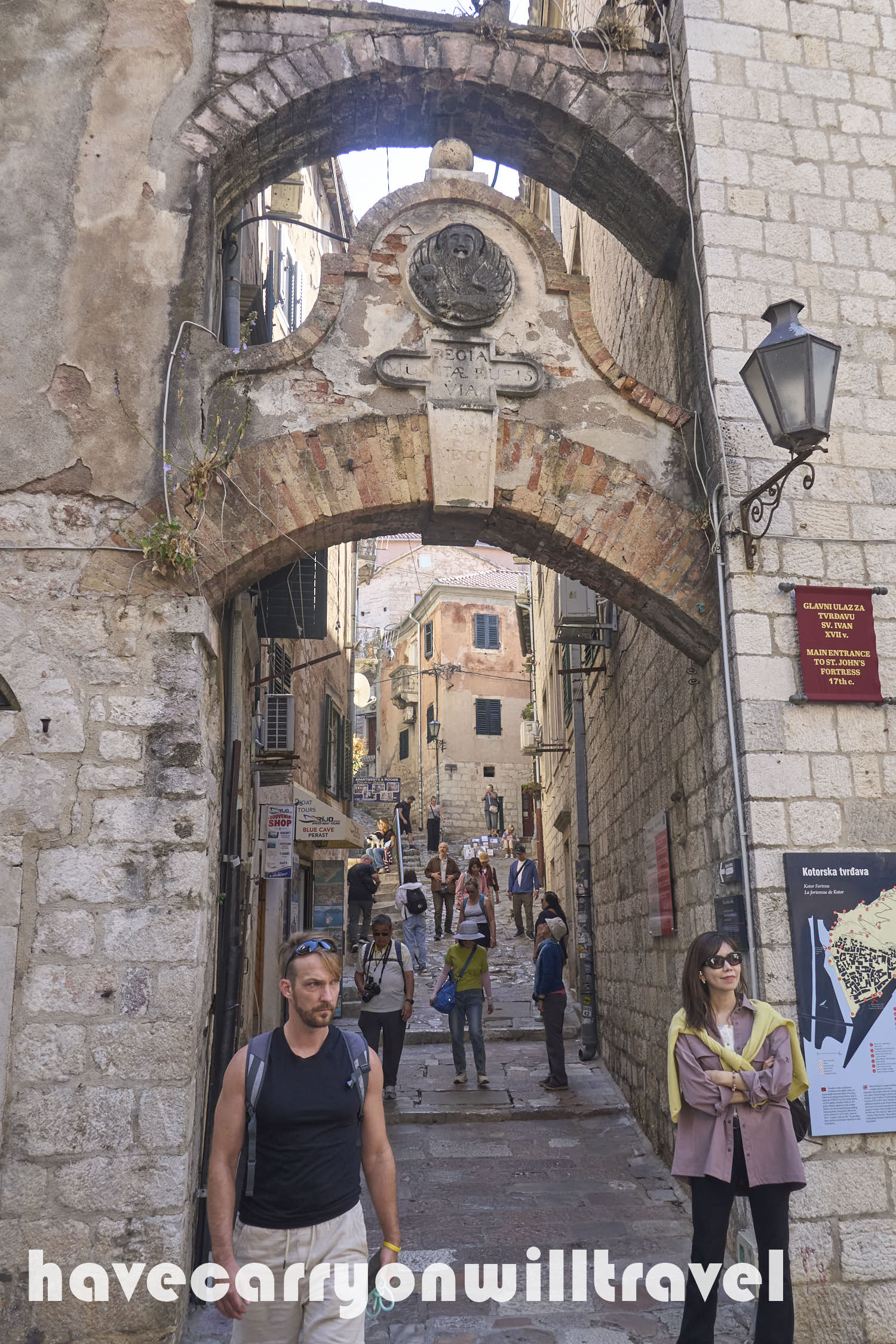
It has been said that Kotor is the Monaco of the Balkans. We finally are at a location that is inundated with tourists. And to top it off, Kotor is a cruise ship stop, which brings in more tourists, for about 6 hours anyway. Our local guide shakes his head about the cruise ships, saying “We cannot expand the space we have to accommodate all the tourists”. Traffic is horrendous on roads that are too narrow. The grocery store is lined up 15 deep.
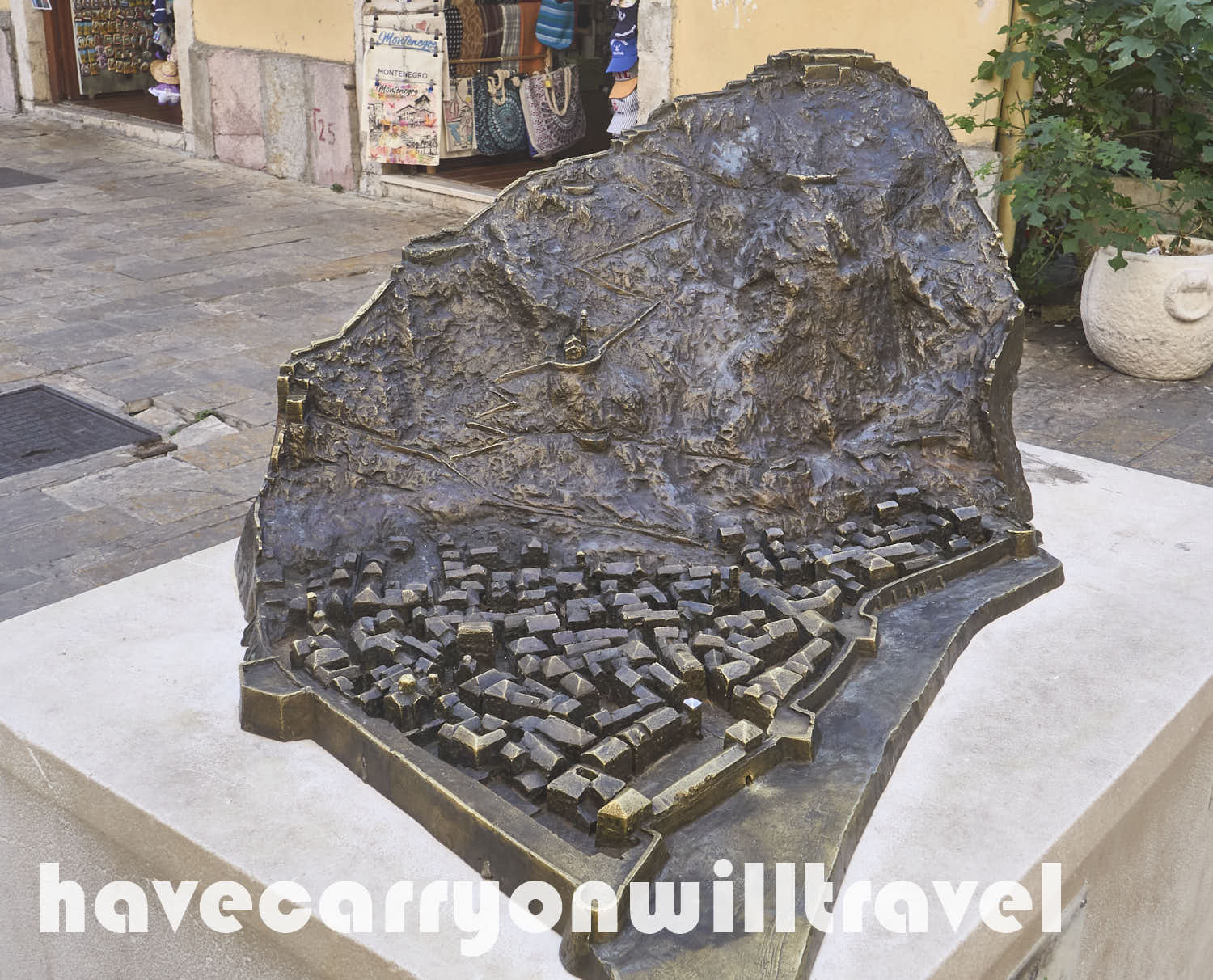
Old Town in Kotor is walled and today houses hostels, shops, restaurants, churches and hotels. It was initially built by the Illyrians in the 5th century and then the Romans, Byzantines and Venetians, leading up to the 19th century. It was an important maritime hub, housing many captains of ships and merchants. The buildings are close together with narrow laneways that are fun to explore. Kotor was never destroyed by war, only by a couple of earthquakes in the last two hundred years. The town is now protected by UNESCO so it maintains that ancient character.
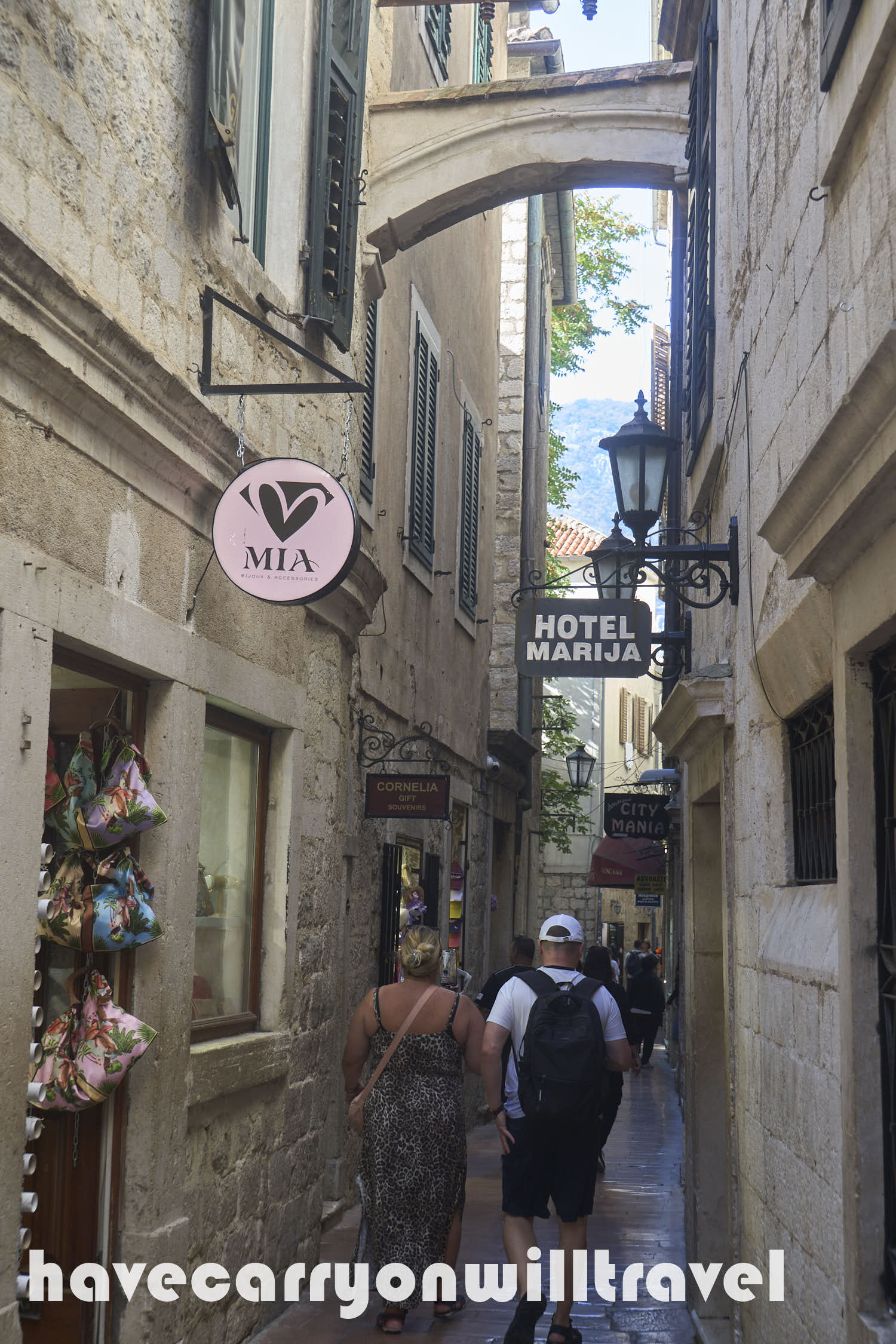
There are three entrances into the town, through the very thick exterior walls. From one part of the town, there is a steep walk up to a small chapel and the fortress, sitting high up on the hillside. It costs a whopping 15 Euros for the honour of sweating up the stairs, which we did not partake in.