We have noted over the last few days that Kosovo and Montenegro are under some major flight paths. You can look up any time of the day and there are at least 4 jet streams crossing the sky.
In all four countries we have been in there is a ‘pedestrians have the right of way’ rule. And everybody obeys them. People on a cross walk are not ignored. If you stand at a curb and look like you want to cross, the next car will stop for you. If the light says don’t walk people come to and immediately stop at the curb and wait. As always there are scoff laws but they are few.
Renewable energy sources are not as visible here as in northern European countries. There are very few solar panels in Albania or Macedonia. We did see a couple of solar panel fields in Kosovo but still very few installations on private buildings. When we crossed the border into Montenegro yesterday, we spotted a few wind turbines and I noted quite a few panel arrays on people’s houses.
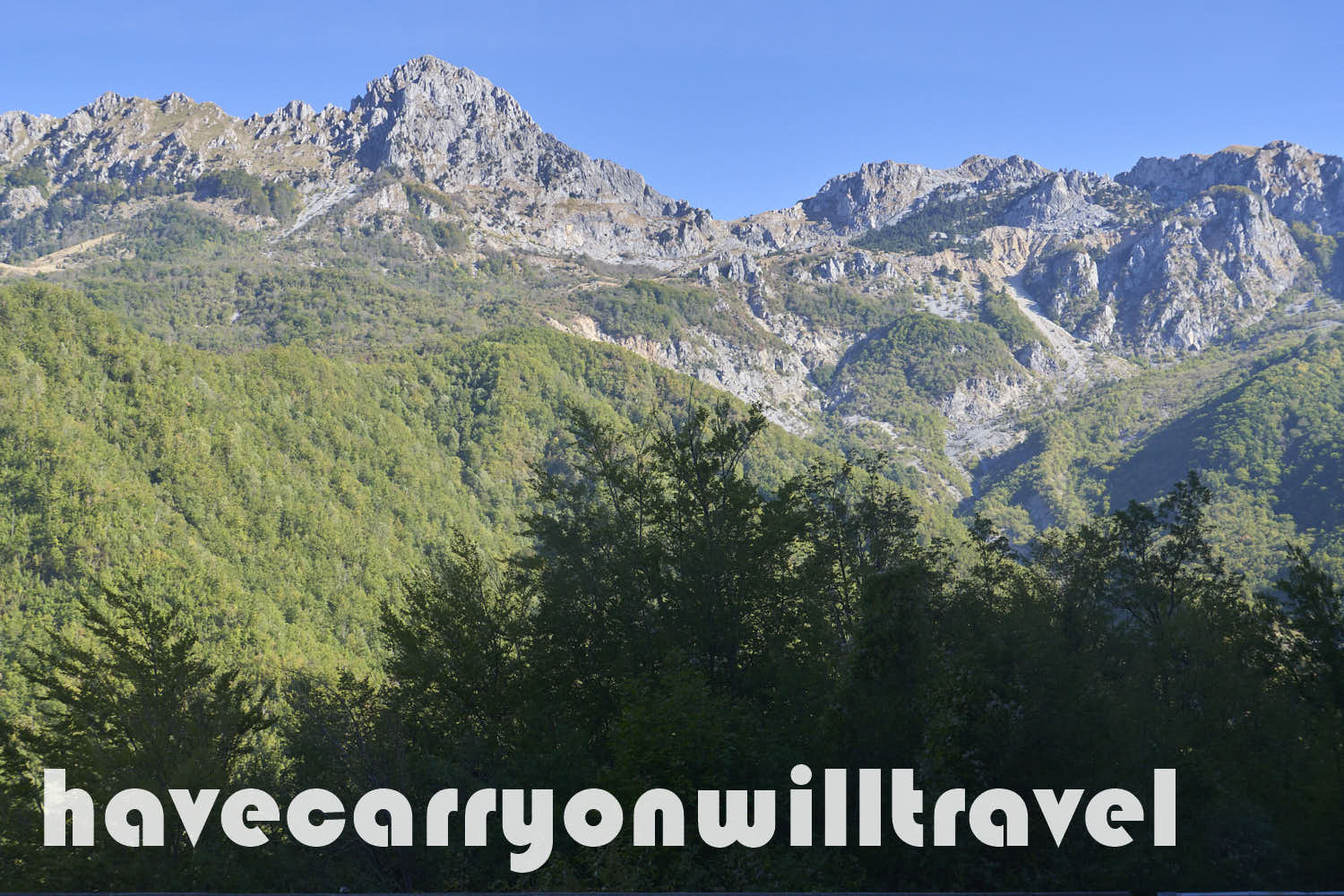
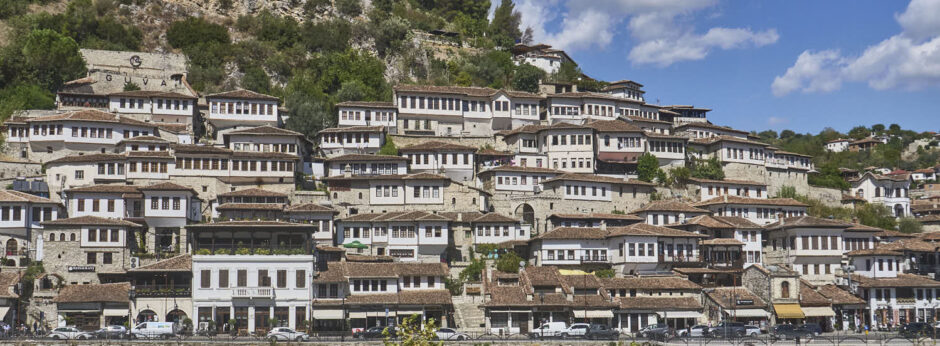
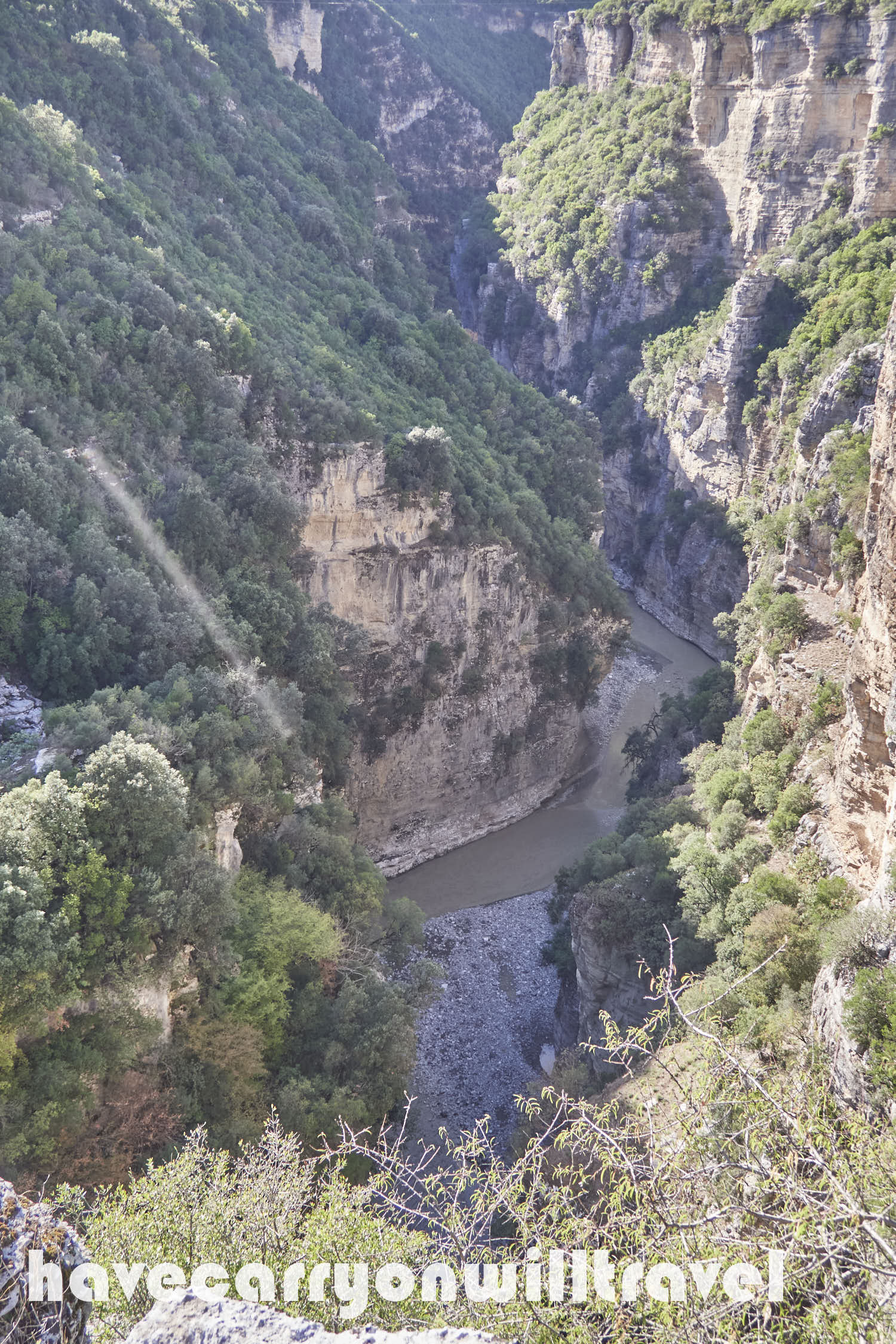
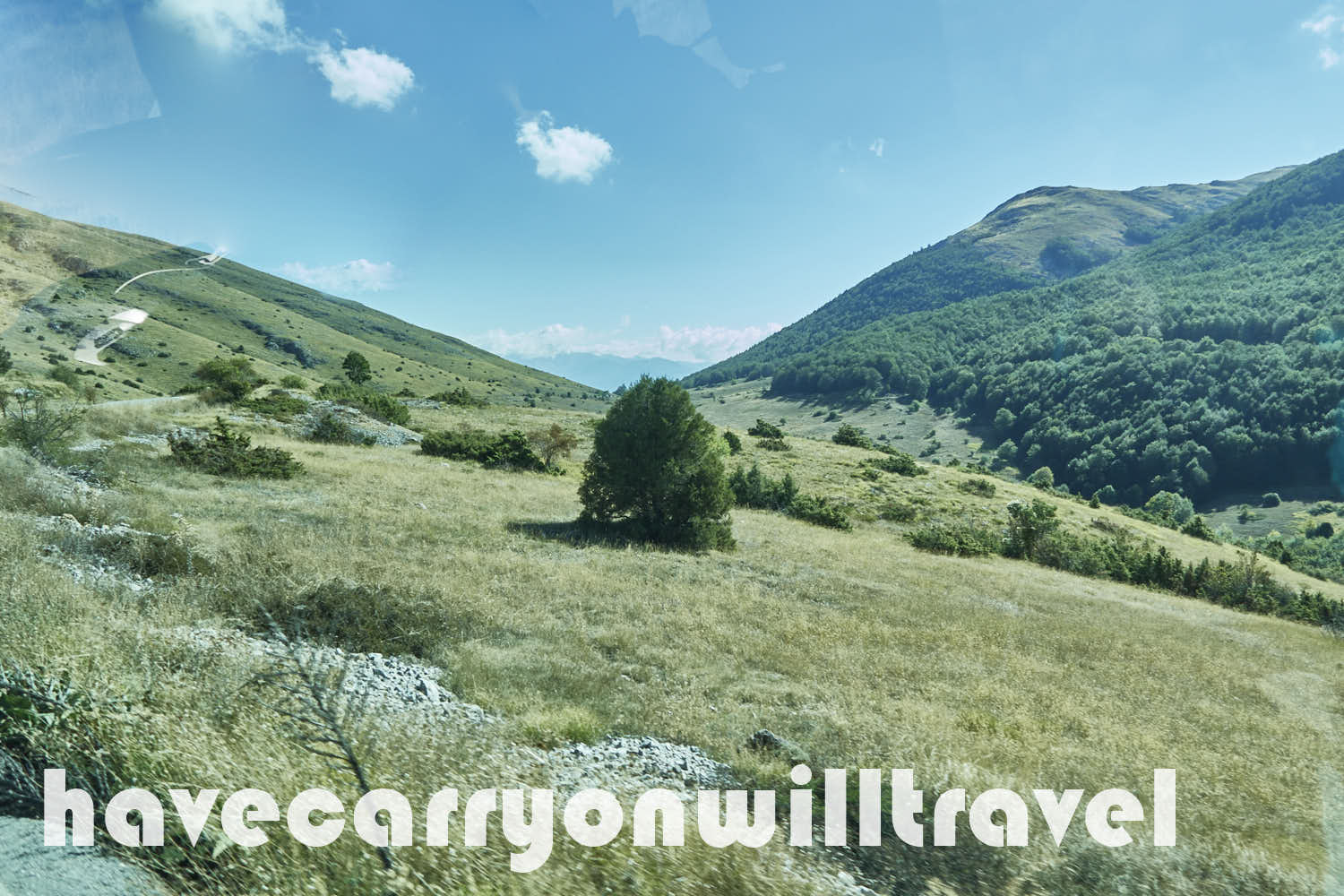
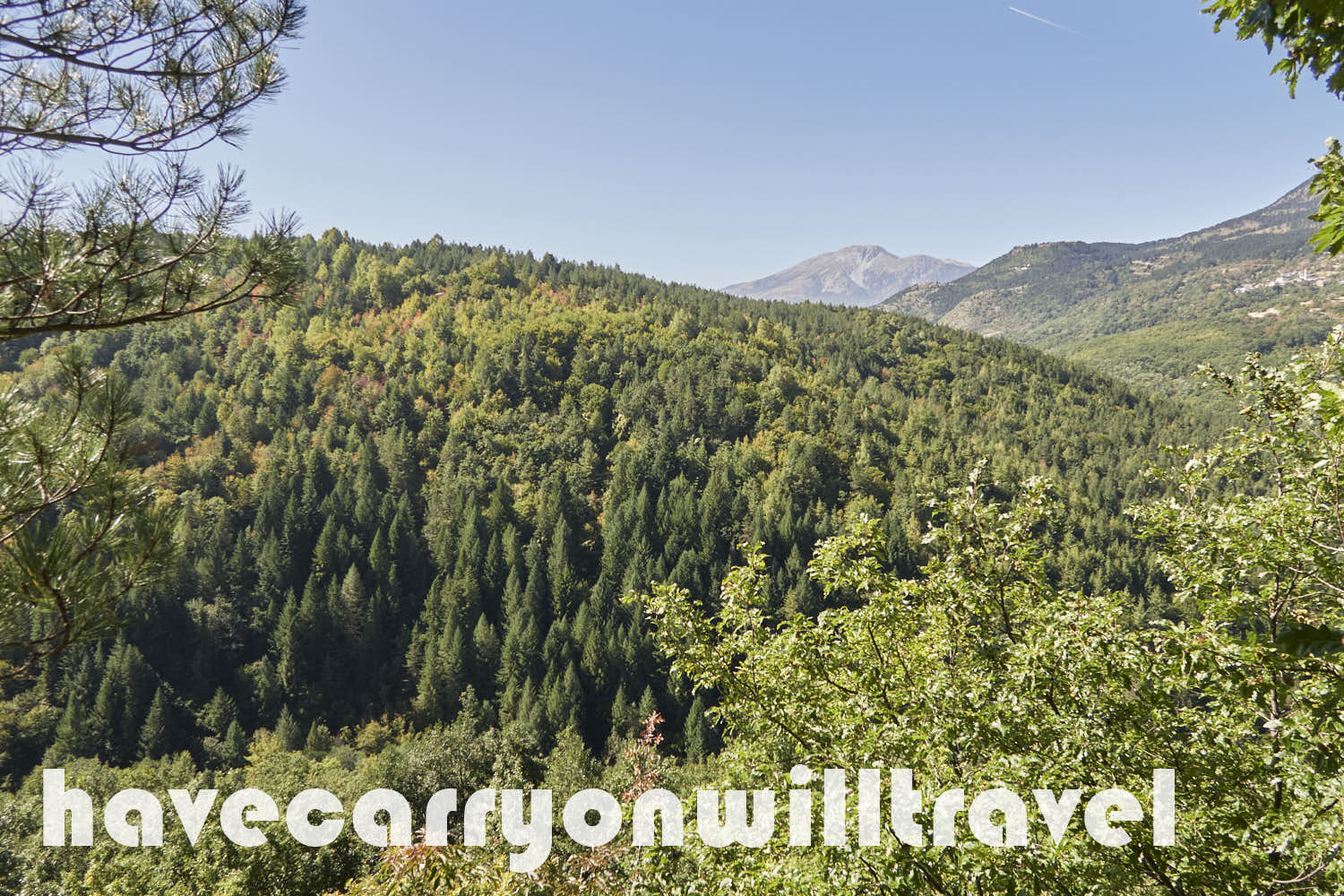
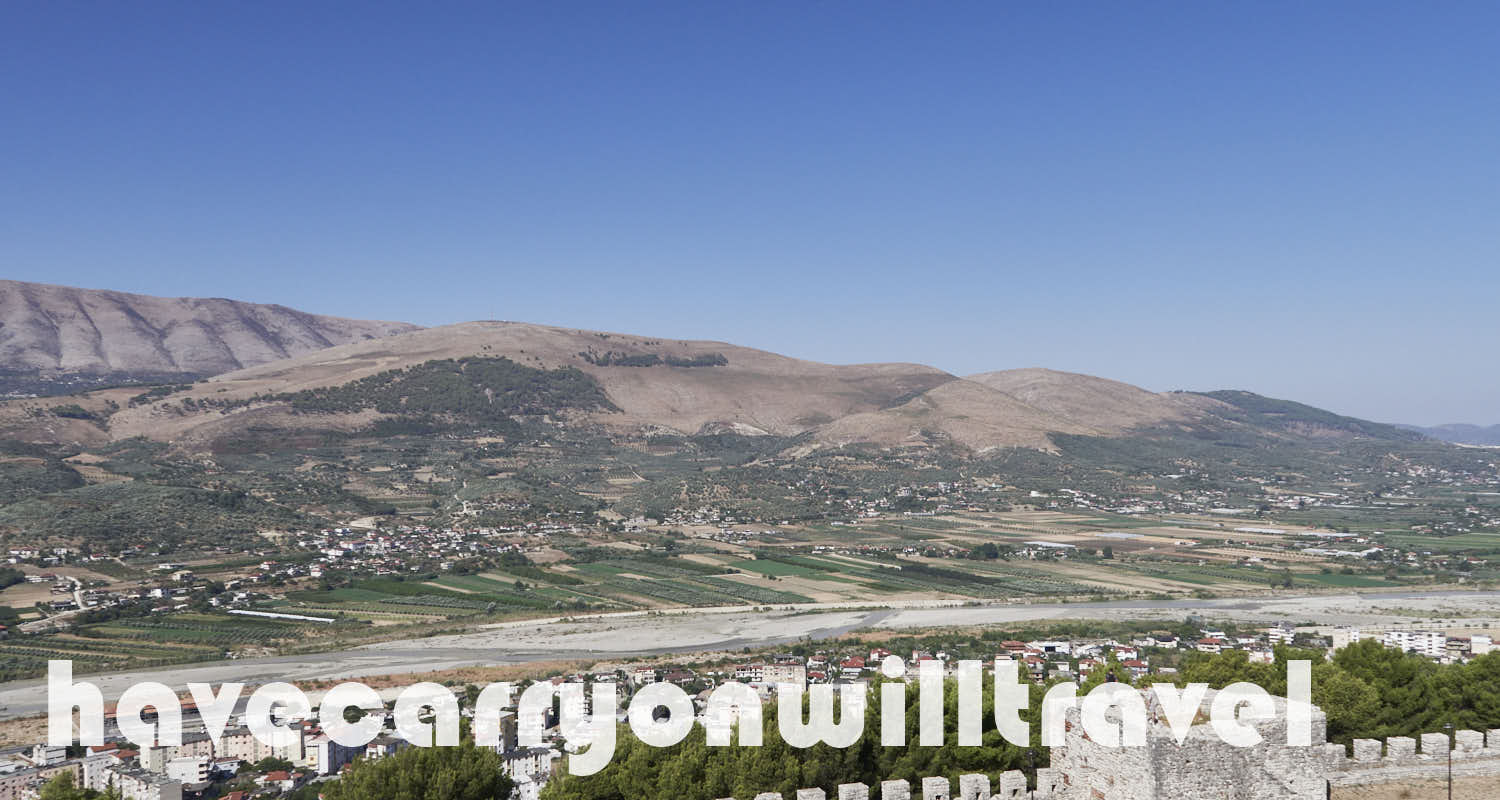
The towns and cities we’ve stopped at have been hit and miss. Some interesting, some not so much. I will expand on them later. The part of the trip I have found extremely interesting is the ever changing country side. The landscape changes from flat to rolling hills to soft topped mountains to craggy mountains like our Canadian Rockies. The vegetation changes from olive groves to fruit orchards to prairies. The trees change from cultivated orchards, to deciduous trees all the way to the tree line of the soft top mountains and then to conifers when we reach the craggy mountains.
There are so many derelict and decaying, very large old factories scattered throughout the countryside in all the counties we have visited. Less so in Montenegro than in the other three countries. The communist dictators that lorded over the counties prior to 1992 had the idea that industrialization would transform. They thought that it was the way of the future. Unfortunately, the projects were not properly planned or funded. When the regime fell and the products of these factories had to compete in a capitalist market, they could not last. The people were forced to work in these factories and they were symbols of the dark days they did not wish to be reminded of.
When everyone works for the state and there is no personal gain, a problem is created. Why should I work harder than the other person, is the thought that goes through people’s heads. And so the work ethic drops to the lowest common denominator. No one is willing to take responsibility. So things fall into disrepair. ‘It’s not my job.’ This detail seems to be a legacy that continues 30+ years later. Every hotel we have stayed at has had minor problems that would only require tweaking to this or that to solve. Curtains falling off the rods, door stops broken or missing and the door handle banging into the wall behind, broken tiles that could be replaced, cupboard doors that are off the rollers and jammed so they do not open, shower doors off the rails so water leaks onto the bathroom floor. All of the could be repaired with simple tools and 5 minutes but they are not. ‘Not my job.’
Last thought. Our guide C has told us about the major difference between the communist regimes that ruled Yugoslavia and Albania from the end of WWII to 1992. Hoxha ruled with an iron fist in the manner of Stalin. Ghosting all of his real and imagined political rivals. He kept the people living in fear. There was no one allowed in or out of the country. He took away all rights. People were poor, had little to eat and rags for clothing. The country was in a worse state of isolation even after Stalin died and Nikita Khrushchev personally visited Hoxha and suggested he de-Stalinize his thoughts and run the country in a more humane manner. Hoxha doubled down and the country standards fell even deeper into despair.
In Yugoslavia, of which North Macedonia, Kosovo, and Montenegro were all a part of, Tito ran a sort of hi-bred communism. The people were allowed to own houses, buy cars, have a passport and travel. Tito was more in touch with the western world and tried to chose the ‘best’ parts of both sides. This made the 1992 transition from communism to capitalism less of a jump and people were able to transition much easier. From what one of our ‘local’ guides told me he didn’t even skim off millions of dollars to live in luxury and today his relatives work for a living like most of the citizens of those countries.